RDCD-C Vehicle-Mounted Cable Fault Testing System | Wrindu

- Wrindu
- Shanghai, China
- about 15 working days
- 500 set/month
- RDCD-C
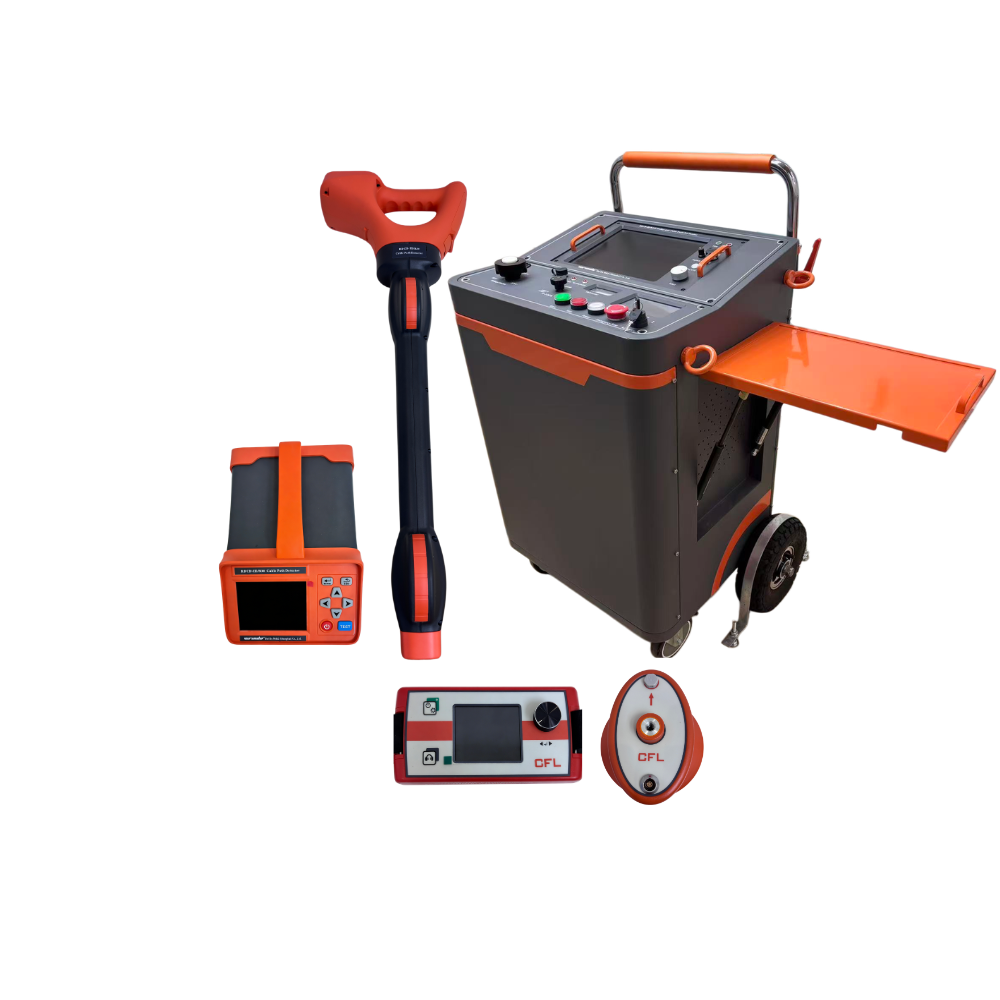
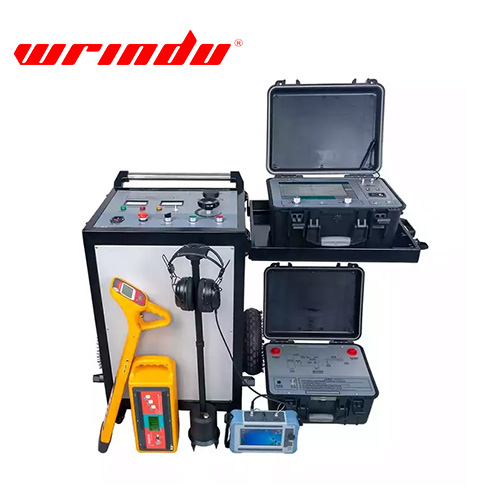
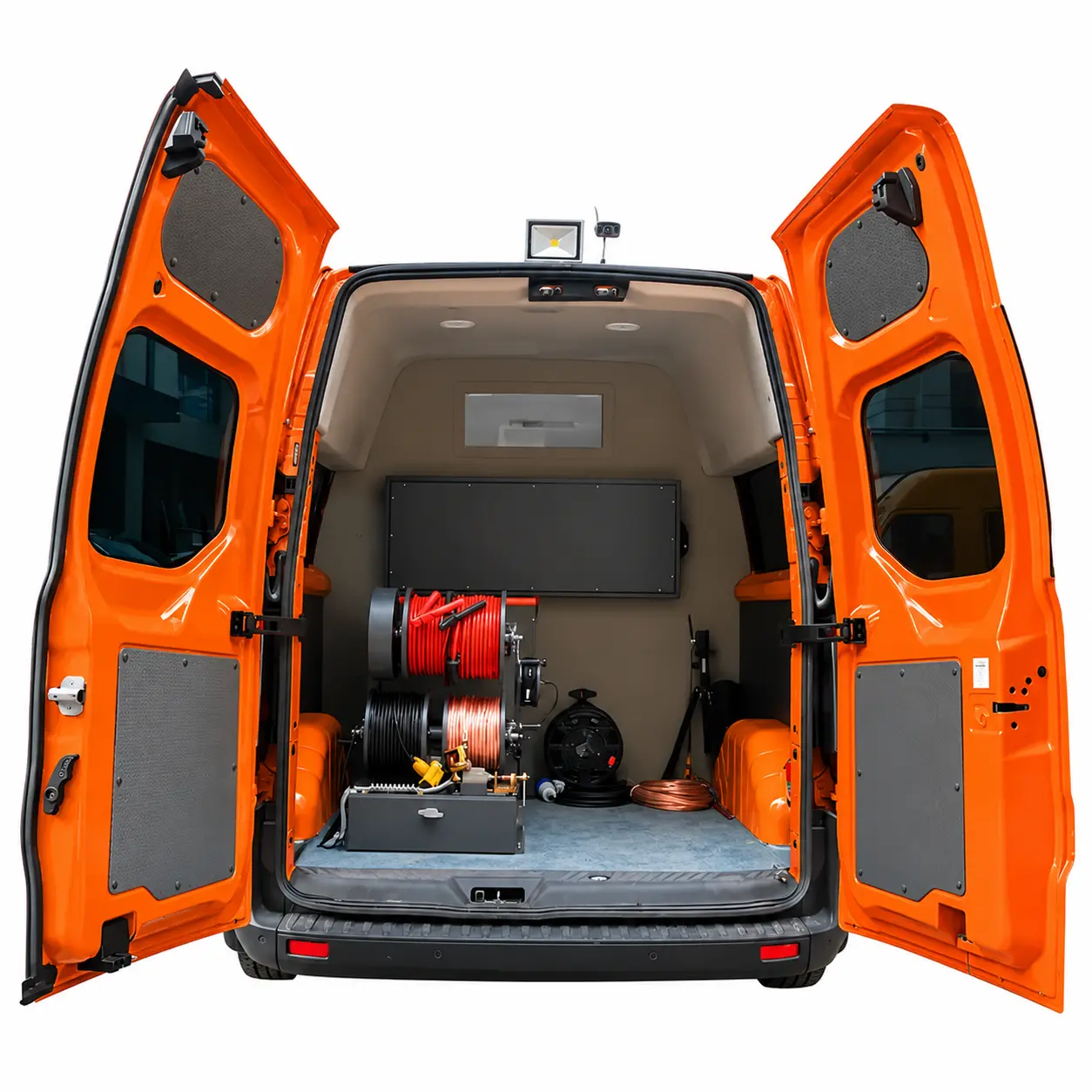
The RDCD-C Vehicle-Mounted Cable Fault Testing System integrates multiple testing functions into one highly integrated system. It is designed to locate and test faults in power cables, railway and airport signal cables, and streetlight cables, making on-site cable testing more efficient and convenient.
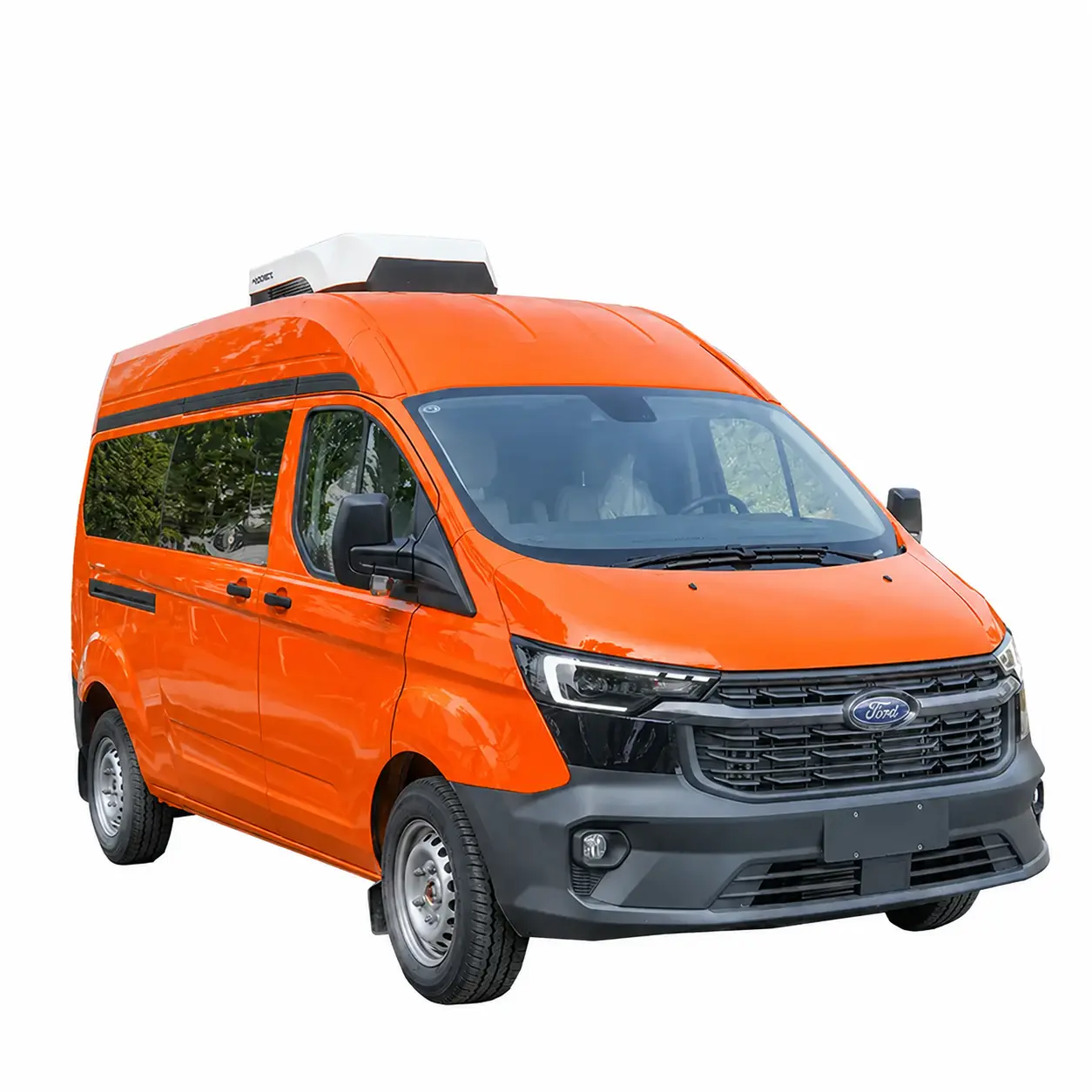
The system is supplied without a vehicle, allowing customers to select a suitable vehicle locally. Its portable design makes installation and use easy, while its testing functions meet relevant power industry standards.
Product Features
1. Cable Length Measurement: Measures the total length of power cables to support installation and maintenance.
2. Wave Velocity Calibration: Calibrates cable signal speed to improve fault location accuracy.
3. Multiple Pulse Technology: Helps pre-locate different types of cable insulation faults.
4. Embedded System: Features a built-in control system with a Chinese-language interface for stable operation.
5. Automated Control: Uses distributed control bus technology for easier operation and test connections.
6. Adjustable High-Voltage Pulses: Provides adjustable pulse frequency and high impulse energy for fault pre-location and precise location.
7. High-Voltage Burn-Through: Uses DC high voltage and continuous high current to carbonize high-resistance fault points, including water-damaged cable faults.
8. 2048 J Impulse Energy: Delivers high impulse energy for locating internal faults in high-resistance cable joints.
9. Cable Withstand Voltage Testing: Checks cable insulation strength and helps identify potential insulation problems.
10. Multiple Safety Protections: Includes grounding monitoring, video surveillance, step voltage protection, and automatic self-check functions.
11. Optional Wireless Intercom: Supports communication between field operators and vehicle personnel for faster coordination.
Compositions of RDCD-C Cable Van Testing System
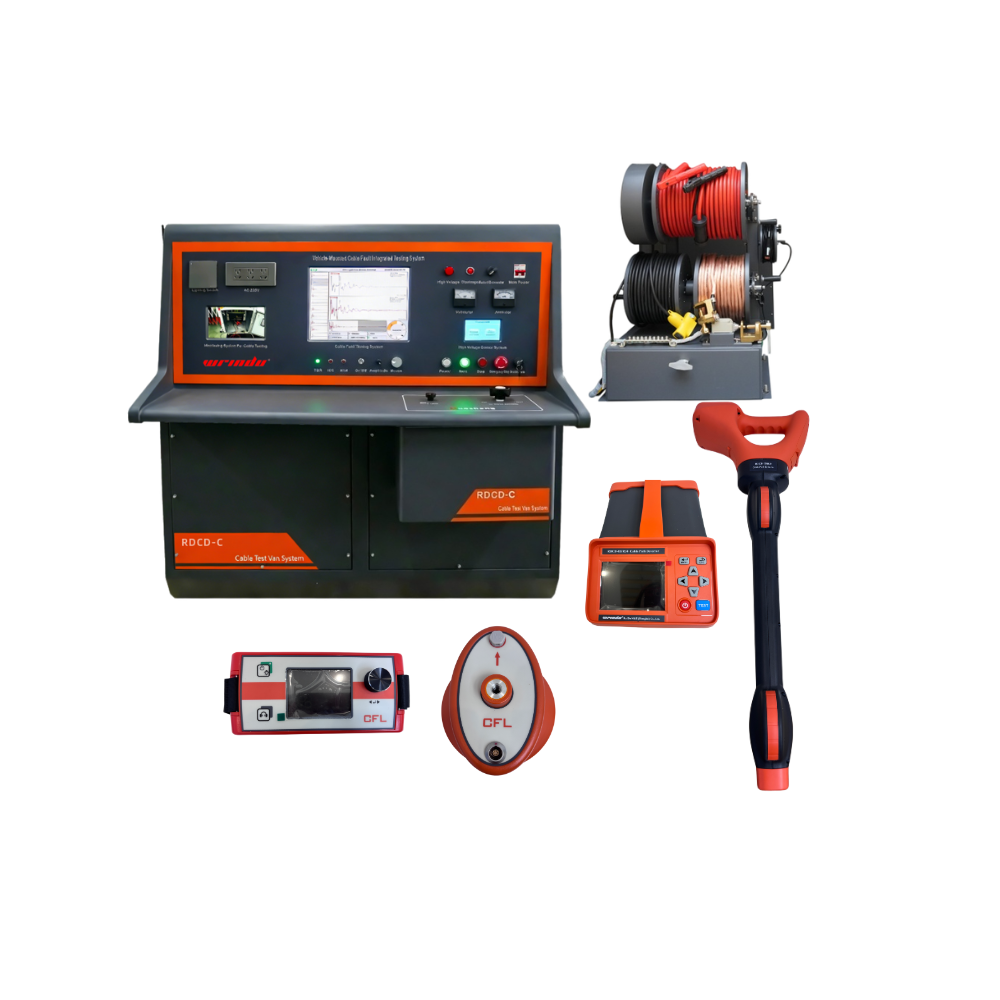
The RDCD-C Cable Van Testing System consists of three main parts: the operation console, the cable reel and safety monitoring system, and the cable fault locating equipment. Each part works together to support cable fault testing, pre-location, precise pinpointing, and cable path detection.
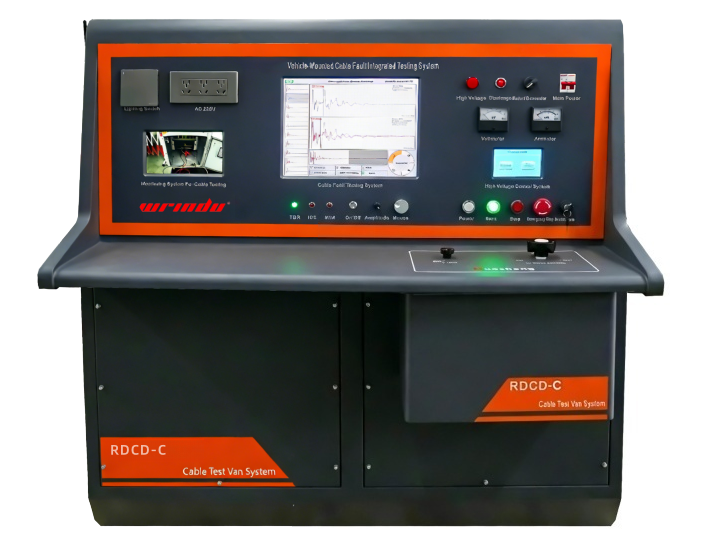
1. RDCD-C/RA40 Operation Console
The operation console is the main control unit of the system. It combines cable fault testing, high-voltage control, and data display functions. It supports different testing methods to locate open-circuit, short-circuit, low-resistance, high-resistance leakage, and flashover faults in power cables.
Main Features
Item | Specifications / Features |
|---|---|
Testing Methods | Low-voltage pulse, high-voltage surge, multiple pulse, DC and burn-through |
Fault Types | Open circuit, short circuit, low resistance, high-resistance leakage and flashover |
Test Distance | 5 m–100 km |
Pinpointing Accuracy | ±0.2 m |
Display | 15-inch industrial LCD screen |
Operating System | Linux |
Sampling Frequency | 6.25–200 MHz |
Burn-Through Voltage | 0–40 kV |
Burn-Through Current | 0–100 mA |
Vehicle-Mounted High-Voltage Control System
The high-voltage control unit provides adjustable voltage and impulse energy for cable fault pre-location and pinpointing. It supports continuous impulse flashover, single impulse flashover, and DC high-voltage testing.
Main Features
Item | Specifications / Features |
|---|---|
Output Voltage | 0–32 kV, continuously adjustable |
Maximum Impulse Energy | 2048 J |
Built-in Capacitors | 4 μF/32 kV, 16 μF/16 kV, 64 μF/8 kV |
Operating Modes | Continuous impulse flashover, single impulse flashover and DC high voltage |
Impulse Interval | 1–10 s |
Display | 5-inch color LCD screen |
Safety Protection | Key-controlled high-voltage activation and automatic discharge |
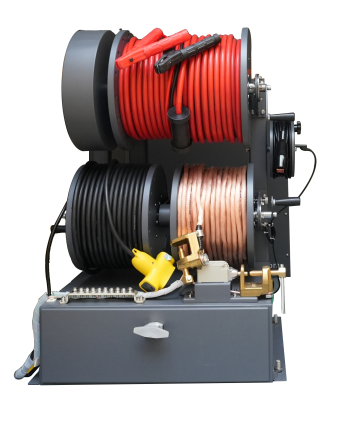
2. Vehicle-Mounted Cable Reel and Safety Monitoring System
This system manages cable connections and monitors operating safety during high-voltage testing. It checks key safety signals in real time and automatically cuts off the high-voltage supply if an abnormal condition occurs.
Main Features
Item | Specifications / Features |
|---|---|
Safety Monitoring | Real-time monitoring of grounding, step voltage, pulse temperature and safety switch status |
Abnormality Alarm | Automatic warning when an abnormal signal is detected |
High-Voltage Protection | Automatic power cutoff and discharge when an abnormality occurs |
High-Voltage Cable Reel | 50 m |
Grounding Cable Reel | 50 m |
Power Cable Reel | 50 m |
Step Voltage Cable Reel | 15 m |
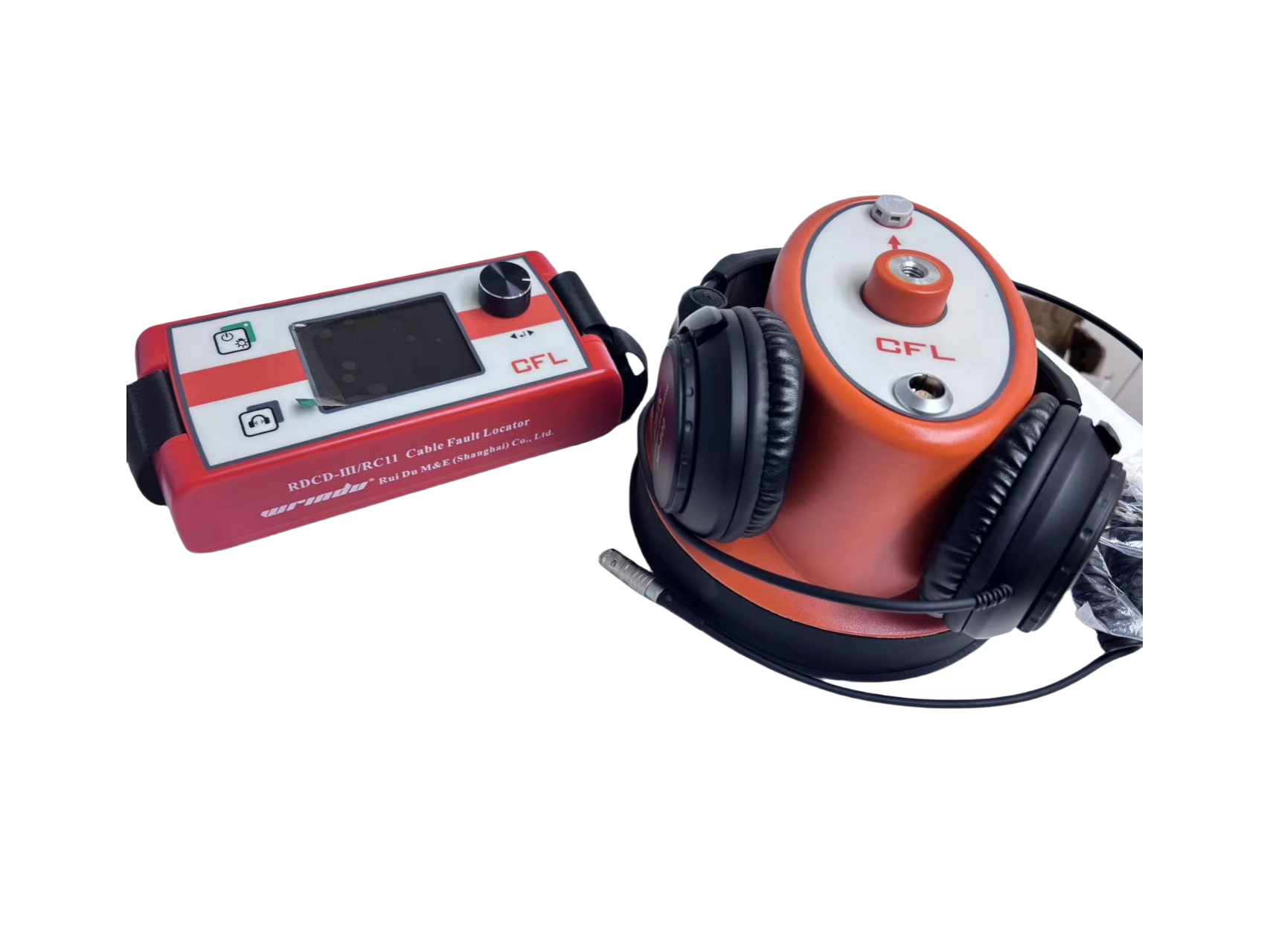
3. RDCD-III/RC11 Cable Fault Locator
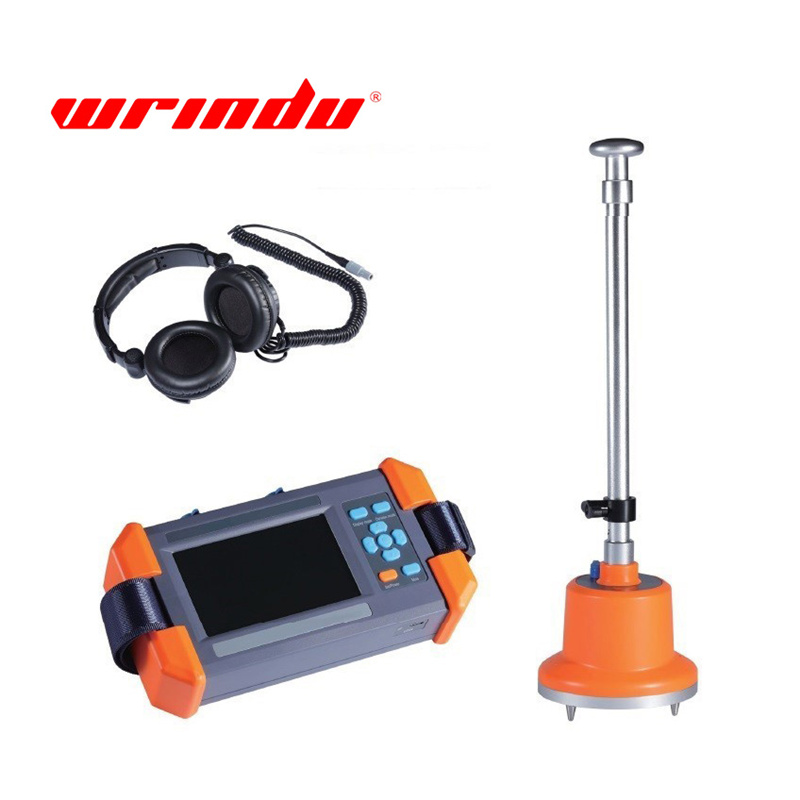
The RDCD-III/RC11 cable fault locator is used to pinpoint underground cable faults after pre-location. It detects the sound and magnetic signals generated by high-voltage impulse discharge to help operators identify the exact fault position.
Main Features
Item | Specifications / Features |
|---|---|
Detection Method | Sound and magnetic field detection |
Signal Processing | Intelligent background noise reduction |
Trigger Adjustment | Automatic adjustment of sound and magnetic field trigger thresholds |
Fault Direction | Displays the direction of the fault point |
Cable Position | Indicates the relative left/right position of the cable |
Ground Probes | Suitable for soft ground, hardened roads and lawns |
LCD Display | 320 × 240 pixels, high-brightness color screen |
Sensor Frequency Range | 100–1500 Hz |
Sensor Dynamic Range | Sound channel: >104 dB; magnetic field channel: >110 dB |
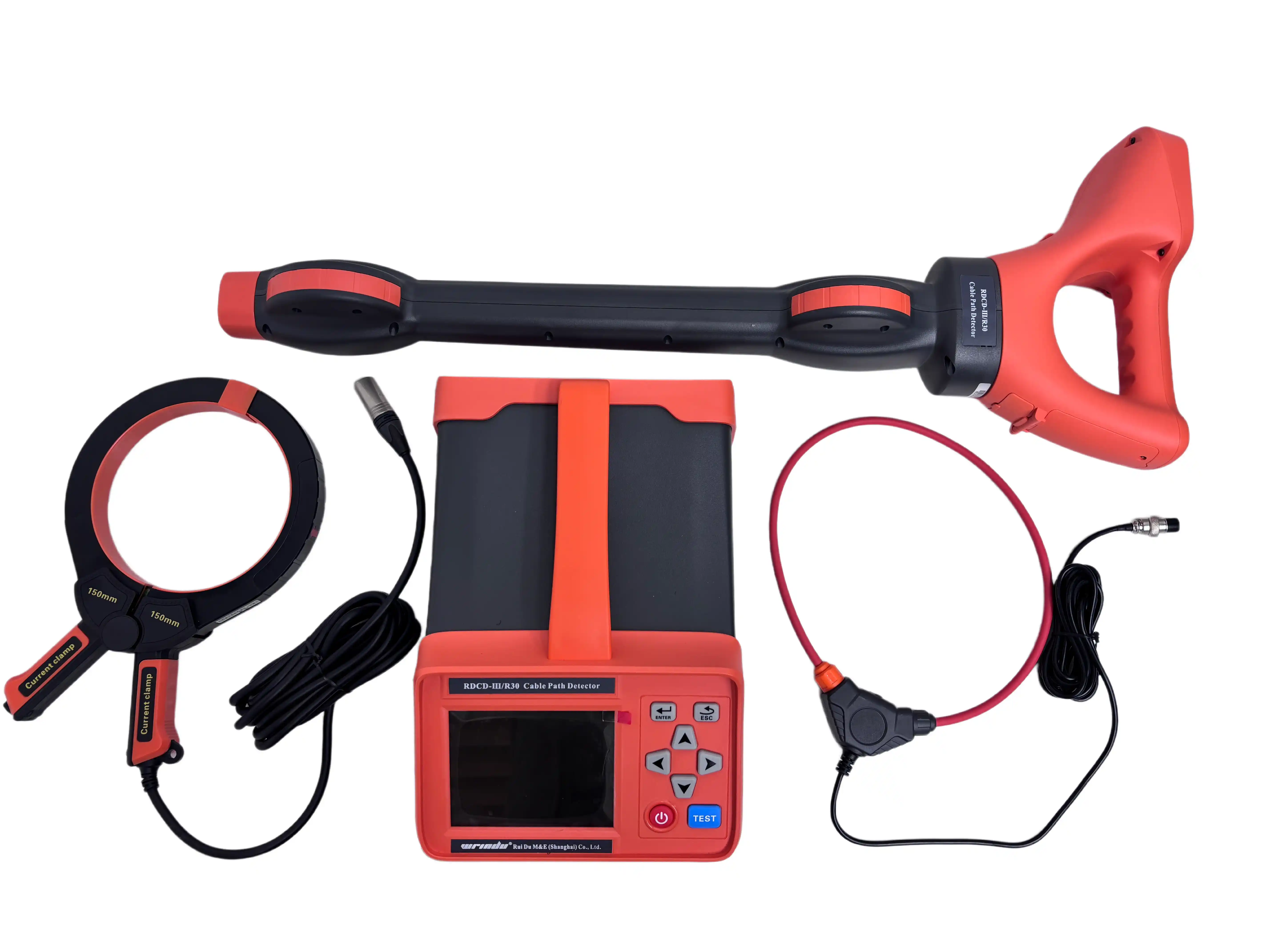
4. RDCD-III/R30 Cable Path Detector
The RDCD-III/R30 cable path detector is used to locate underground cables, measure burial depth, and identify target cables. It helps operators trace cable routes and avoid damaging the wrong cable during excavation or maintenance.
Main Features
Item | Specifications / Features |
|---|---|
Main Functions | Cable route detection, depth measurement and cable identification |
Detection Modes | Classic locating, full-screen signal and signal curve |
Detection Frequencies | 10 active frequencies and 2 passive frequencies |
Signal Output | Direct connection, clamp coupling and induction |
Cable Identification | Supports energized and de-energized cables |
Pre-Calibration | Up to 10 cables |
Signal Display | Cable direction, signal strength, depth and relative position |
Anti-Interference | Digital signal processing to reduce nearby power frequency and harmonic interference |
Optional Accessories
Accessory | Main Function |
|---|---|
A-Frame | Locates grounding faults in directly buried cables |
Flexible Current Clamp | Identifies target cables through non-contact current detection |
Transmitting Clamp | Transfers detection signals to target cables through clamp coupling |
How Does the RDCD-C Cable Fault Testing System Work?
The RDCD-C uses several testing methods to locate cable faults, from initial detection to precise pinpointing. Different modules work together to help operators identify the fault type, estimate its distance, and find its actual position underground.
The typical testing process includes the following steps:
Testing Step | Main Equipment | Purpose |
|---|---|---|
Cable Length Measurement | RDCD-C/RA40 Operation Console | Measures the total cable length and calibrates wave velocity. |
Fault Pre-Location | RDCD-C/RA40 Operation Console | Uses low-voltage pulse or multiple pulse methods to estimate the fault distance. |
High-Voltage Testing | High-Voltage Control System | Applies high-voltage pulses to identify high-resistance and flashover faults. |
Fault Pinpointing | RDCD-III/RC11 Cable Fault Locator | Uses acoustic and magnetic signals to identify the exact fault position. |
Cable Route Detection | RDCD-III/R30 Cable Path Detector | Locates underground cable routes and measures burial depth. |
Cable Identification | RDCD-III/R30 Cable Path Detector | Identifies the target cable among multiple underground cables. |
This testing process combines distance measurement, fault pre-location, and on-site pinpointing. It helps reduce unnecessary excavation and makes cable maintenance more efficient.
What Types of Cable Faults Can the RDCD-C Detect?
Different cable faults require different testing methods. The RDCD-C supports several methods to handle common insulation and conductor faults in power cables.
Cable Fault Type | Description | Applicable Testing Method |
|---|---|---|
Open-Circuit Fault | A broken conductor interrupts the current path. | Low-voltage pulse testing |
Short-Circuit Fault | Two or more conductors become electrically connected. | Low-voltage pulse testing |
Low-Resistance Fault | Damaged insulation creates a low-resistance path between conductors or to ground. | Low-voltage pulse testing |
High-Resistance Leakage Fault | Damaged insulation allows leakage current under test voltage. | High-voltage testing and burn-through |
High-Resistance Flashover Fault | Insulation breakdown occurs when the applied voltage reaches a certain level. | High-voltage surge and multiple pulse testing |
The choice of testing method depends on the fault type and cable condition. For example, low-voltage pulse testing is suitable for many open-circuit and low-resistance faults, while high-voltage surge testing helps detect high-resistance and intermittent flashover faults.
Where Can the RDCD-C Cable Van Testing System Be Used?
The RDCD-C is designed for field testing and maintenance of underground cables. Its different modules support cable fault detection, route tracing, and cable identification across several applications.
Application | Typical Testing Requirements |
|---|---|
Power Utilities | Locate underground power cable faults and identify damaged cable sections. |
Railway Systems | Test railway signal control cables and trace underground cable routes. |
Airports | Inspect airport signal and control cables to support reliable operation. |
Street Lighting | Locate faults in underground streetlight cables and identify cable routes. |
Industrial Facilities | Support cable inspection, fault location, and electrical maintenance. |
The system is suitable for cable maintenance teams, power utilities, electrical contractors, and organizations responsible for underground cable networks.
What Should Operators Consider Before Cable Fault Testing?
Accurate cable fault location depends on more than the testing instrument. Cable information, fault conditions, testing methods, and site conditions can all affect the results.
Before starting a test, operators should consider the following points:
1. Confirm Cable Information: Check cable type, rated voltage, length, cross-section, and insulation material.
2. Check the Cable Condition: Identify whether the cable has an open circuit, short circuit, or suspected insulation fault.
3. Select the Right Testing Method: Choose low-voltage pulse, multiple pulse, high-voltage surge, or DC testing according to the fault condition.
4. Calibrate Wave Velocity: Use the correct wave velocity to improve the accuracy of distance measurement.
5. Check the Cable Route: Use the cable path detector to identify the underground route before excavation.
6. Verify Safety Connections: Check grounding cables, test leads, and safety monitoring functions before applying high voltage.
High-voltage cable testing must be performed by qualified personnel. Operators should follow the equipment instructions and applicable site safety procedures, including proper grounding, discharge, and isolation before handling test connections.
What Makes the RDCD-C Suitable for Field Cable Testing?
The RDCD-C combines several testing instruments in one vehicle-mounted system. Instead of using separate equipment for every testing stage, operators can use the integrated system for cable fault pre-location, precise pinpointing, route detection, and cable identification.
About Wrindu – Cable Fault Testing Equipment Manufacturer
Wrindu is a Chinese OEM manufacturer of high-voltage electrical testing equipment, established in 2014. The company provides testing instruments and power testing solutions for power utilities, electrical laboratories, transformer manufacturers, and industrial customers.
With a 50,000+ m² manufacturing facility, six production lines, and more than 200 employees, Wrindu supports product development, manufacturing, OEM/ODM services, and customized testing solutions. Its products are exported to more than 120 countries.
For cable testing applications, the RDCD-C Cable Van Testing System integrates multiple instruments to support cable fault pre-location, precise pinpointing, and underground cable route detection. Wrindu also provides technical guidance and a one-year product warranty.