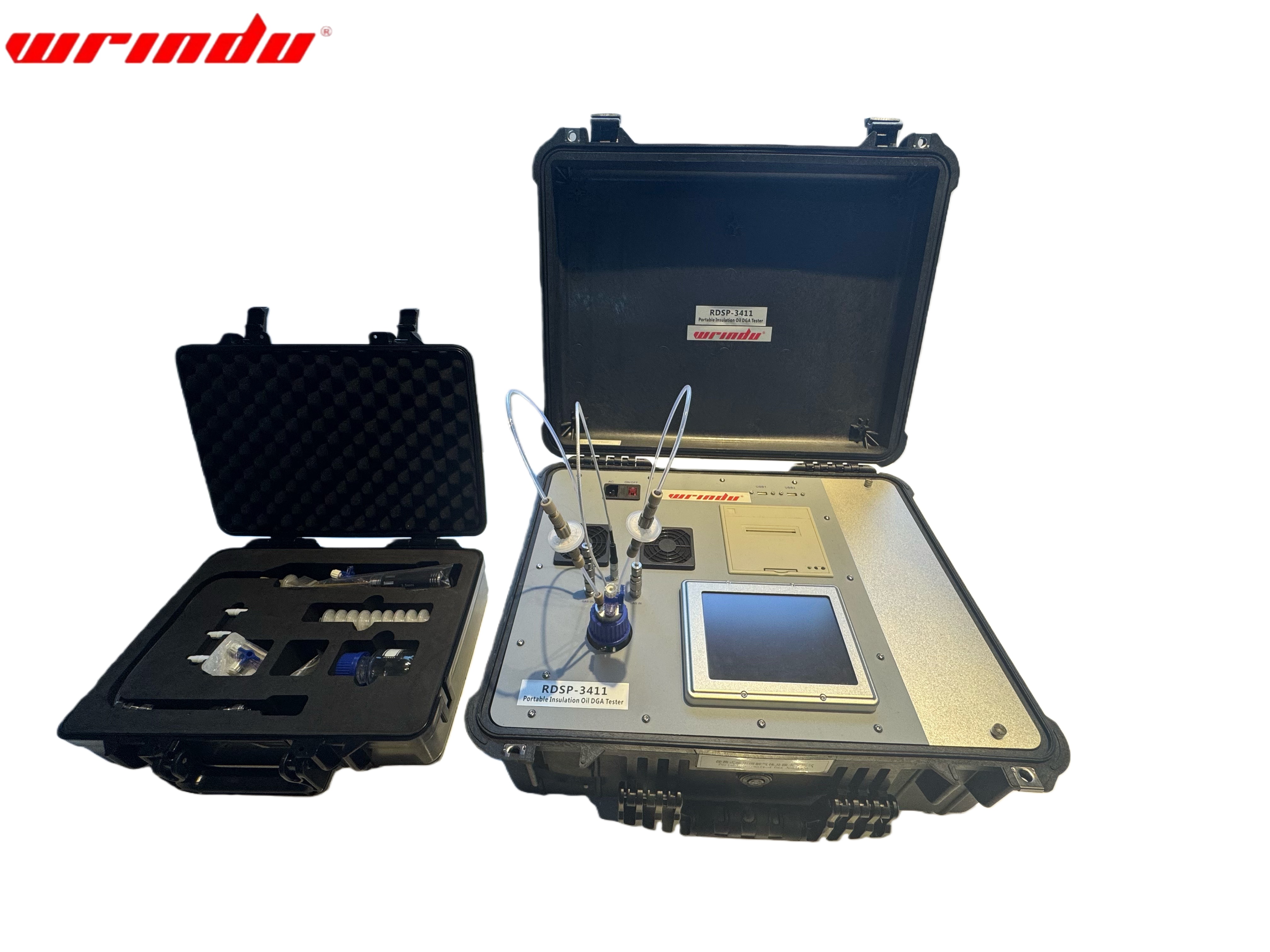
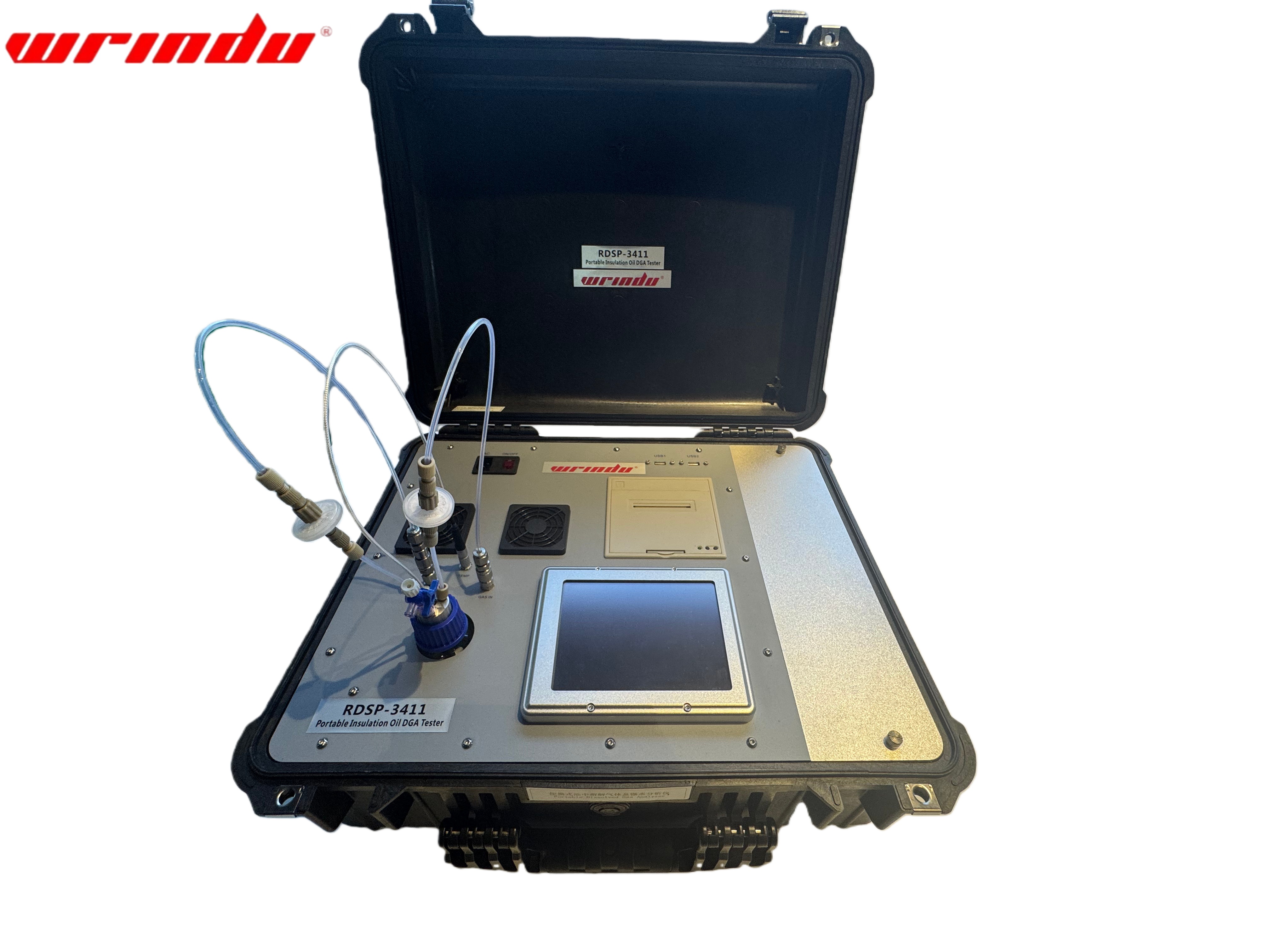
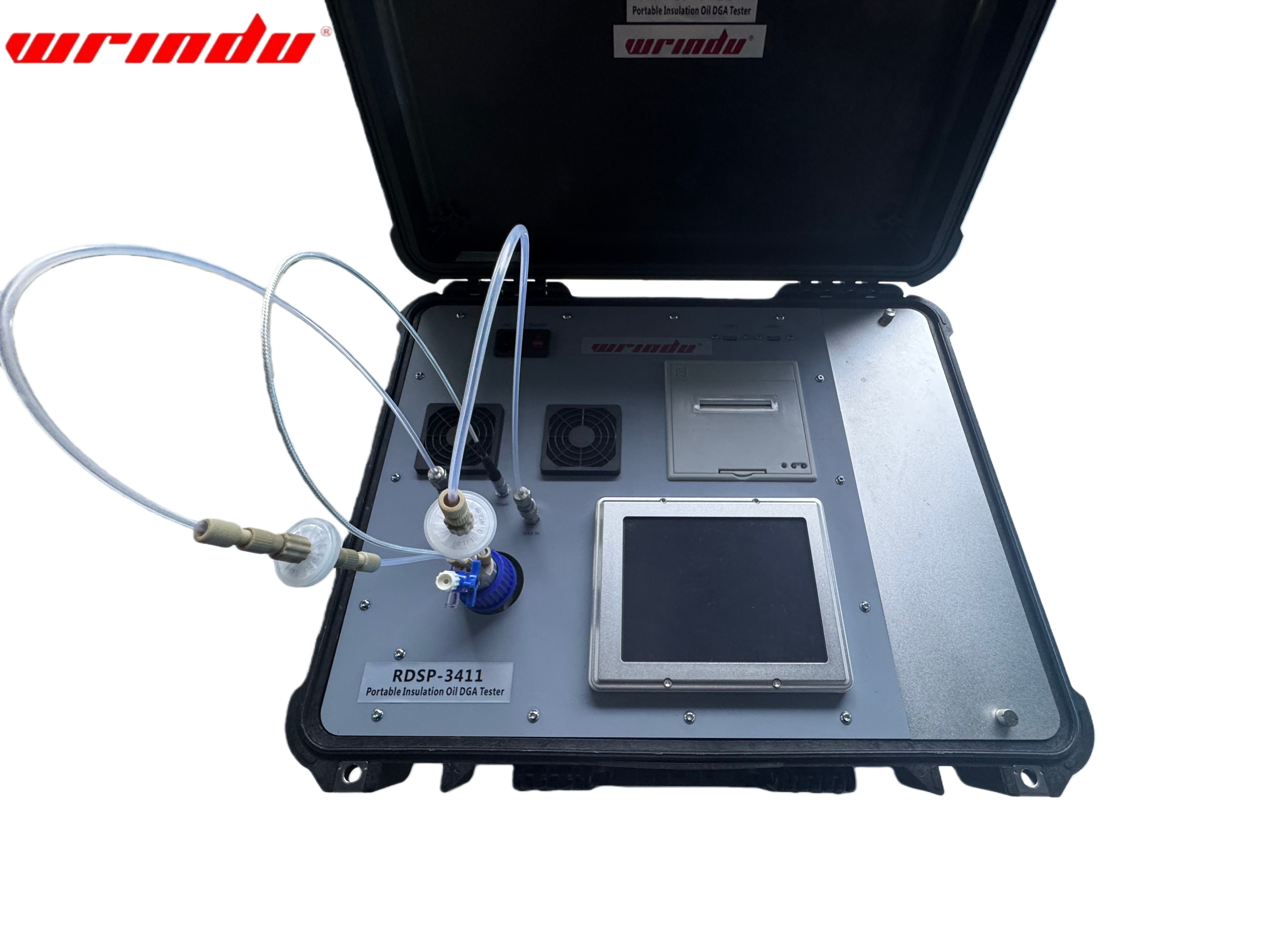
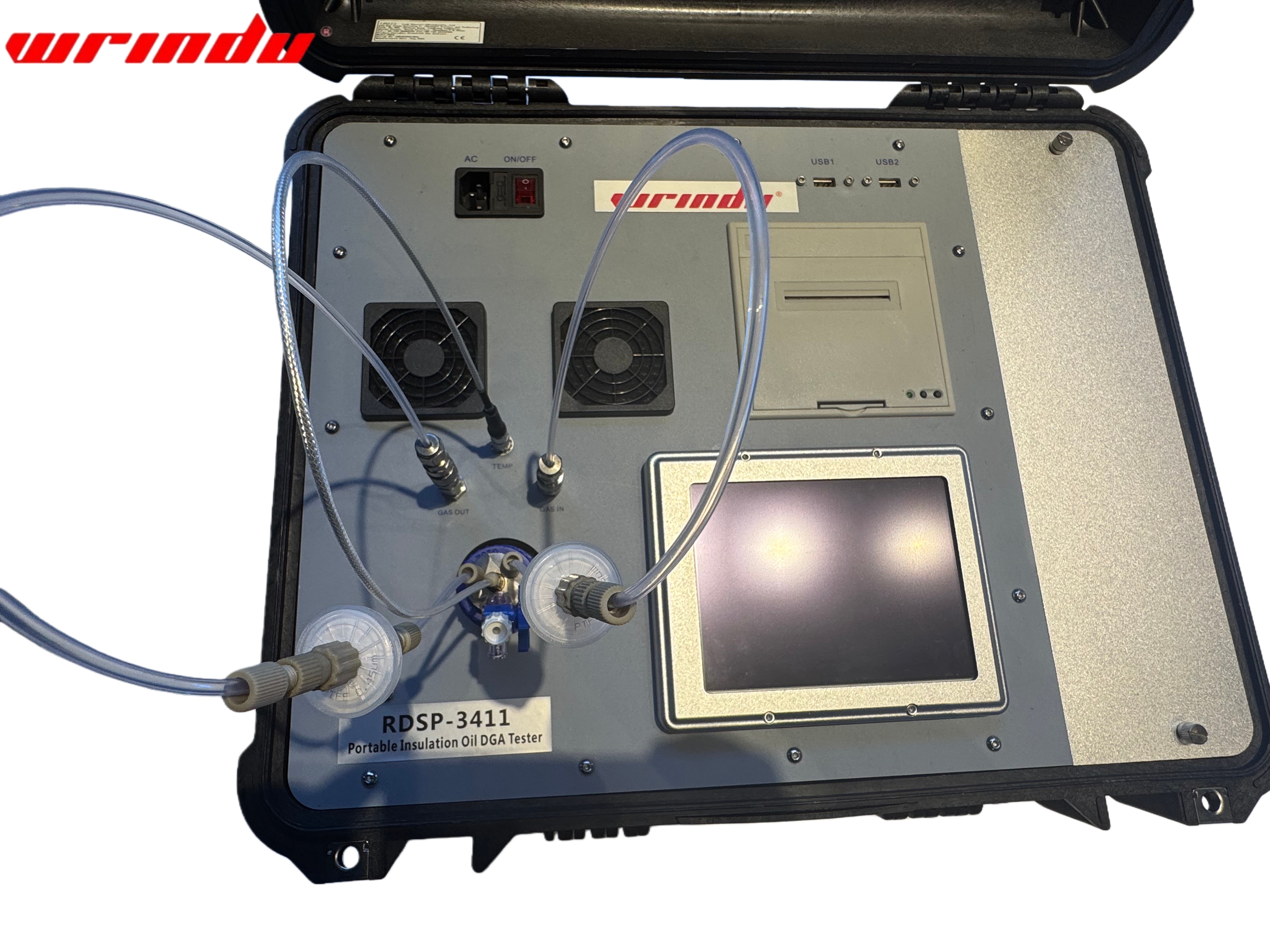
Portable Insulation Oil DGA Tester

- Wrindu
- Shanghai, China
- about 10 working days
- 1000 set/month
- RDSP-3411
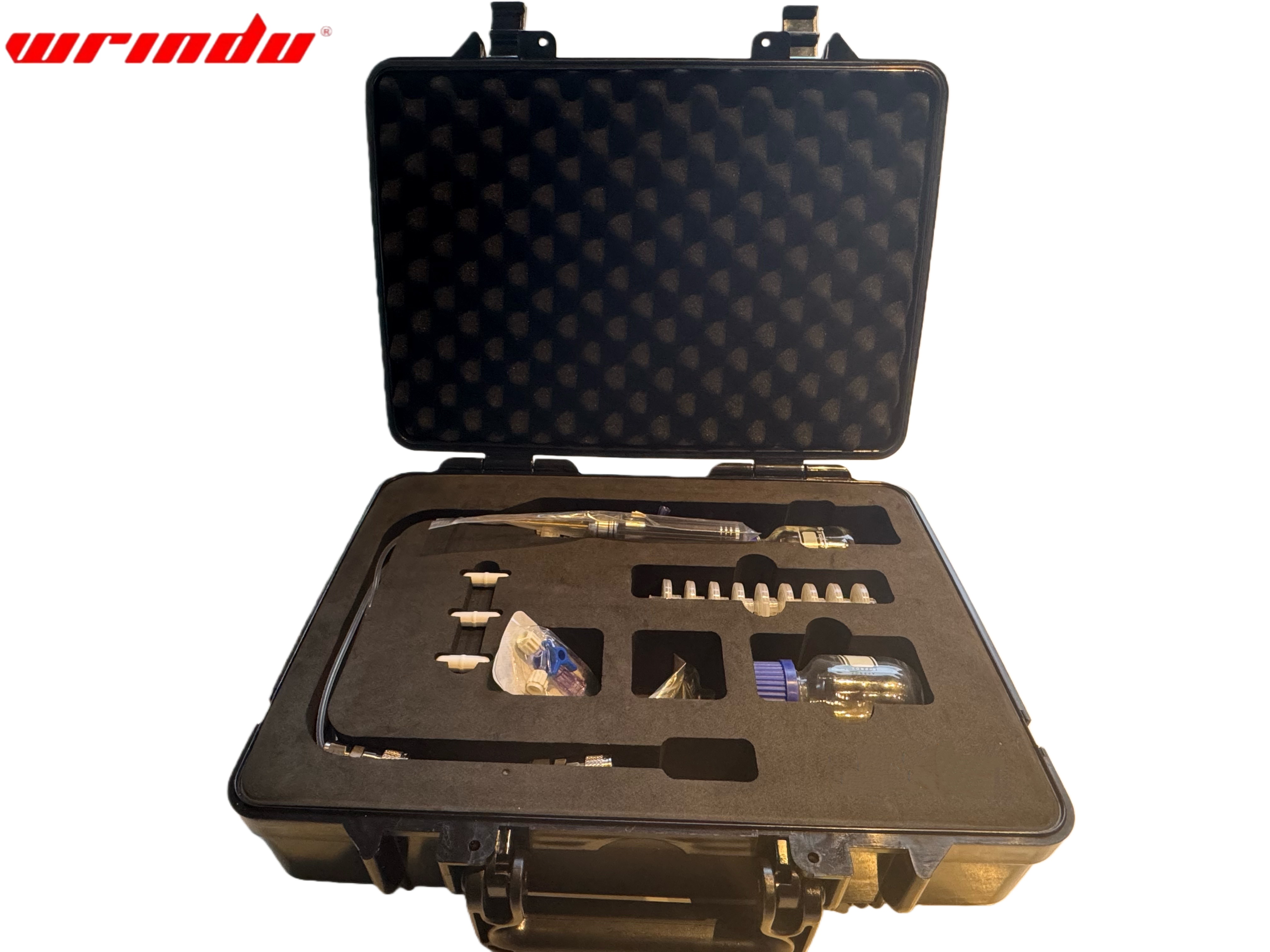
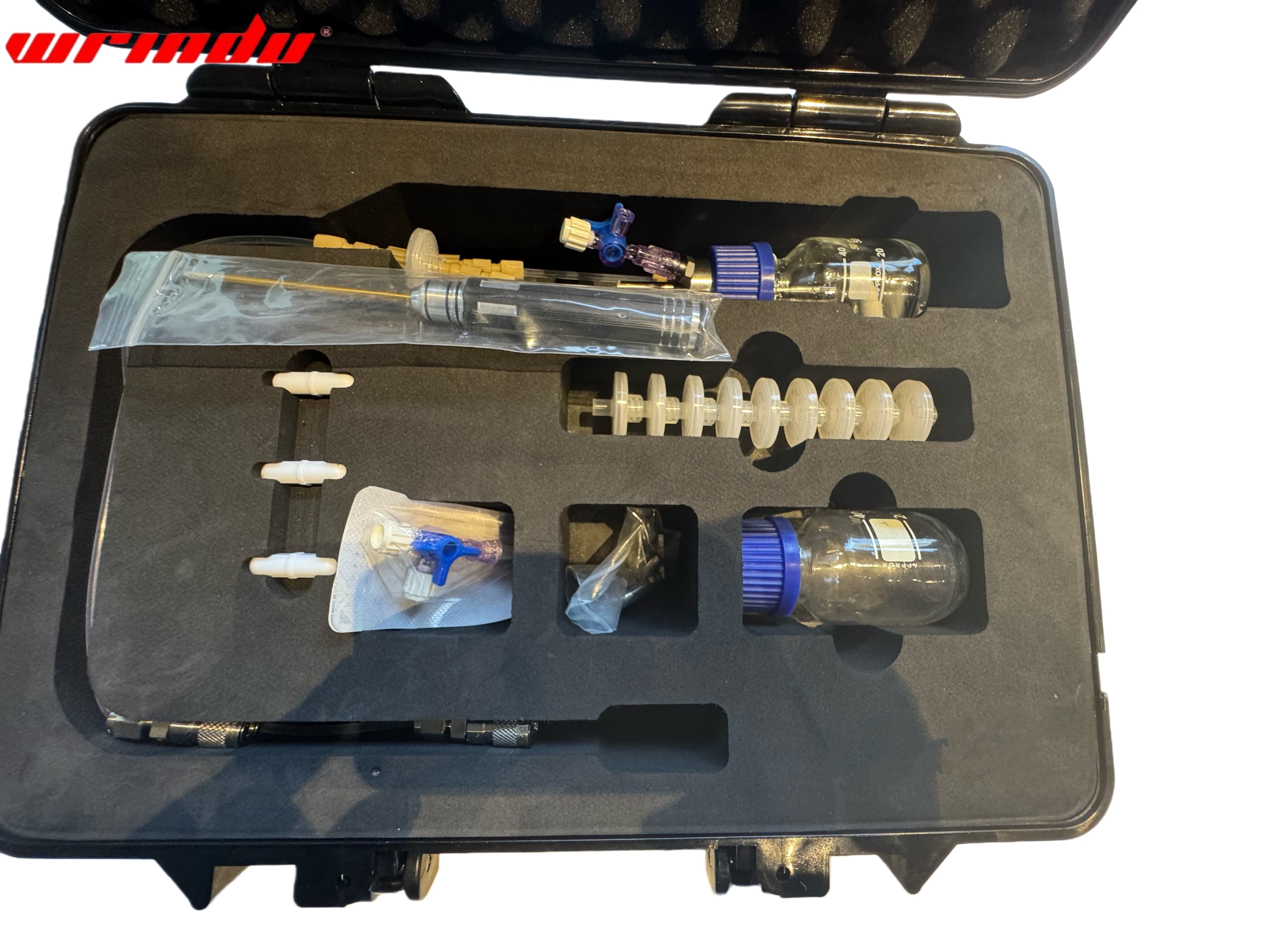
The RDSP-3411 Portable Insulation Oil DGA Tester is a new generation of equipment designed to analyze dissolved gases in oil. It uses advanced infrared photo-acoustic spectroscopy technology, offering accurate and reliable results quickly. With a user-friendly interface, it allows for easy operation in the field.
In just 20 minutes, the RDSP-3411 can measure the concentration of 7 key fault gases and moisture. This makes it a great alternative to traditional Gas Chromatography systems used in laboratories. As a result, the RDSP-3411 is an excellent tool for evaluating the quality of insulation oil in electrical equipment.
Product Features
1. Fast measuring in the field: Within 20 minutes, 7 key fault gases and moisture can be read.
2. No consumables: Pure physical photo-acoustic spectroscopy technology, the consumables of calibration gas and carrier gas are needless.
3. Moisture in the oil: The concentration of moisture in the oil can be given during the same one test.
4. Easy to operate: Touch keyboard operation, simple and easy to operate, no need for training
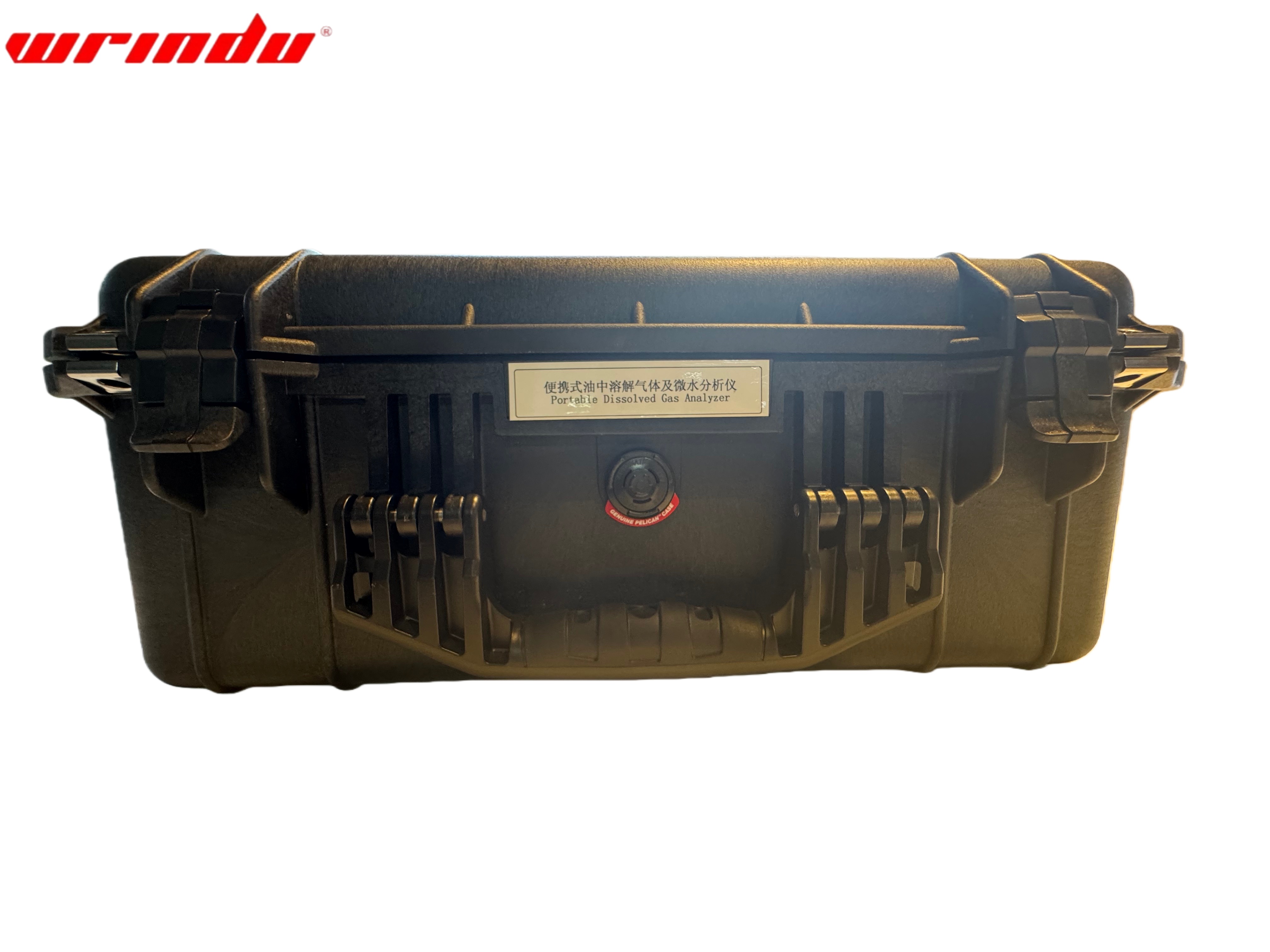
5. Portable and rugged: Weighs <10 kg, in a rugged and convenient carry case.
6. Reliable: Engineered design provides inherent reliability and high accuracy.
7. DGA diagnosis: International general faults gases diagnosis method, preset the warning limits. Roger’s ratios, Duval's Triangle, IEEE key gases.
8. PC communication: External PCs is possible via USB connections, allowing databases to be imported or downloaded.
9. Samples: Oil and gas.
Technical Parameters
| Feature | Details |
|---|---|
| Detection Range and Resolution | Gas |
| Hydrogen (H2) | |
| Carbon Monoxide (CO) | |
| Carbon Dioxide (CO2) | |
| Ethylene (C2H4) | |
| Ethane (C2H6) | |
| Methane (CH4) | |
| Acetylene (C2H2) | |
| Moisture (H2O) | |
| Accuracy or Tolerance | Valve <20ppm |
| Valve ≥ 20ppm | |
| Samples | Oil |
| Gas | |
| PC Port | USB |
| Printing Output | 2 inch mini printer |
| Power | AC100~250V, 47~63Hz, 12W |
| Host Dimension | 524mm × 428mm × 206mm |
For more oil test equipment, please click Oil Testing Equipment.
If your company has purchasing needs, please click Contact Us, we are always ready to provide you with quotes and solutions.
What Does a Transformer DGA Analyzer Measure?
Dissolved Gas Analysis (DGA) is used to examine gases dissolved in transformer insulating oil. Different gases can be associated with different thermal, electrical, or insulation-related conditions inside a transformer.
The analyzer measures the concentration of key dissolved gases, including:
Hydrogen (H₂)
Methane (CH₄)
Ethane (C₂H₆)
Ethylene (C₂H₄)
Acetylene (C₂H₂)
Carbon monoxide (CO)
Carbon dioxide (CO₂)
Moisture (H₂O)
Looking at these gases together is more useful than focusing on a single gas. For example, hydrogen, methane, ethane, ethylene, and acetylene are commonly considered when evaluating possible electrical or thermal activity, while CO and CO₂ can provide additional information about the condition of cellulose-based insulation.
Why Is DGA Used for Transformer Condition Monitoring?
A transformer can develop internal problems without showing an obvious external symptom. DGA provides a way to examine the gas condition of the insulating oil and identify changes that may require further investigation.
DGA results can be used during:
Routine transformer maintenance
Preventive condition monitoring
Commissioning and acceptance testing
Troubleshooting
Follow-up after abnormal operating conditions
Long-term trend analysis
A single DGA result provides useful information, but trend data can be even more valuable. Comparing results from the same transformer over time can help maintenance teams identify changes in gas concentration and determine whether additional investigation is needed.
What Do the Seven Key Fault Gases Indicate?
The seven gases measured by the analyzer do not have one fixed meaning. Their significance depends on the concentration, gas combination, rate of change, transformer design, operating history, and other test results.
| Gas | Common Diagnostic Relevance |
|---|---|
| H₂ | Often considered when evaluating partial discharge and other electrical activity |
| CH₄ | Commonly associated with lower-temperature thermal or electrical activity |
| C₂H₆ | Often considered in thermal fault assessment |
| C₂H₄ | Frequently used when evaluating higher-temperature thermal faults |
| C₂H₂ | Can be important when investigating arcing or high-energy electrical faults |
| CO | Provides information related to paper/cellulose insulation activity |
| CO₂ | Used together with CO and other information when assessing cellulose insulation condition |
These relationships are used as part of a diagnostic process rather than as a standalone fault conclusion.
What Are the Limitations of DGA Results?
DGA is a condition-monitoring method, not a complete transformer diagnostic system.
A gas concentration should not be interpreted without considering the sampling method, transformer operating conditions, historical data, and other relevant tests. Different diagnostic methods can also produce different interpretations when gas concentrations are close to diagnostic boundaries.
When an abnormal result is found, additional testing and engineering assessment may be required before maintenance action is taken.
This is particularly important when DGA results are used to support decisions involving major transformer maintenance or outage planning.
What Testing Standards Are Relevant to Transformer DGA?
DGA testing should be carried out according to the applicable standard and sampling procedure for the specific application.
Commonly referenced standards and guides include:
IEC 60567 – Guidance on the sampling of gases and analysis of free and dissolved gases in oil-filled electrical equipment
IEC 60599 – Guidance on the interpretation of dissolved and free gases analysis
IEEE C57.104 – Guide for the interpretation of gases generated in mineral oil-immersed transformers
The exact testing and diagnostic requirements can vary depending on the transformer type, oil type, regional practice, and utility procedure. Users should therefore confirm the applicable edition and acceptance criteria before testing.
How Can Wrindu Support Professional DGA Testing?
Wrindu develops and supplies electrical testing equipment for applications including transformer testing, oil testing, SF6 testing, cable testing, insulation testing, CT/PT testing, and other power equipment diagnostics.
For DGA applications, Wrindu combines measurement hardware with functions for data storage, PC communication, printing, and commonly used gas diagnosis methods. This allows the instrument to be used not only for obtaining individual gas readings but also for organizing and reviewing test information.
Wrindu provides a 1-year warranty for its testing equipment under the applicable warranty terms. Technical guidance is available for product operation, basic troubleshooting, and application-related questions. OEM, ODM, and customized configurations can also be discussed for specific project requirements.
| Wrindu Service | Wrindu Support |
|---|---|
| Warranty | 1-year warranty for the equipment |
| Technical Support | Help with installation, operation, and testing |
| User Training | Basic training for equipment operation |
| Remote Support | Online help for common technical problems |
| Repair Service | Maintenance and repair support when needed |
| Spare Parts | Replacement parts support according to equipment requirements |
| Data & Software Support | Help with data transfer, software, and PC connection |
| Customized Service | OEM, ODM, and project-based technical solutions |
| Long-Term Support | Technical assistance after the warranty period |