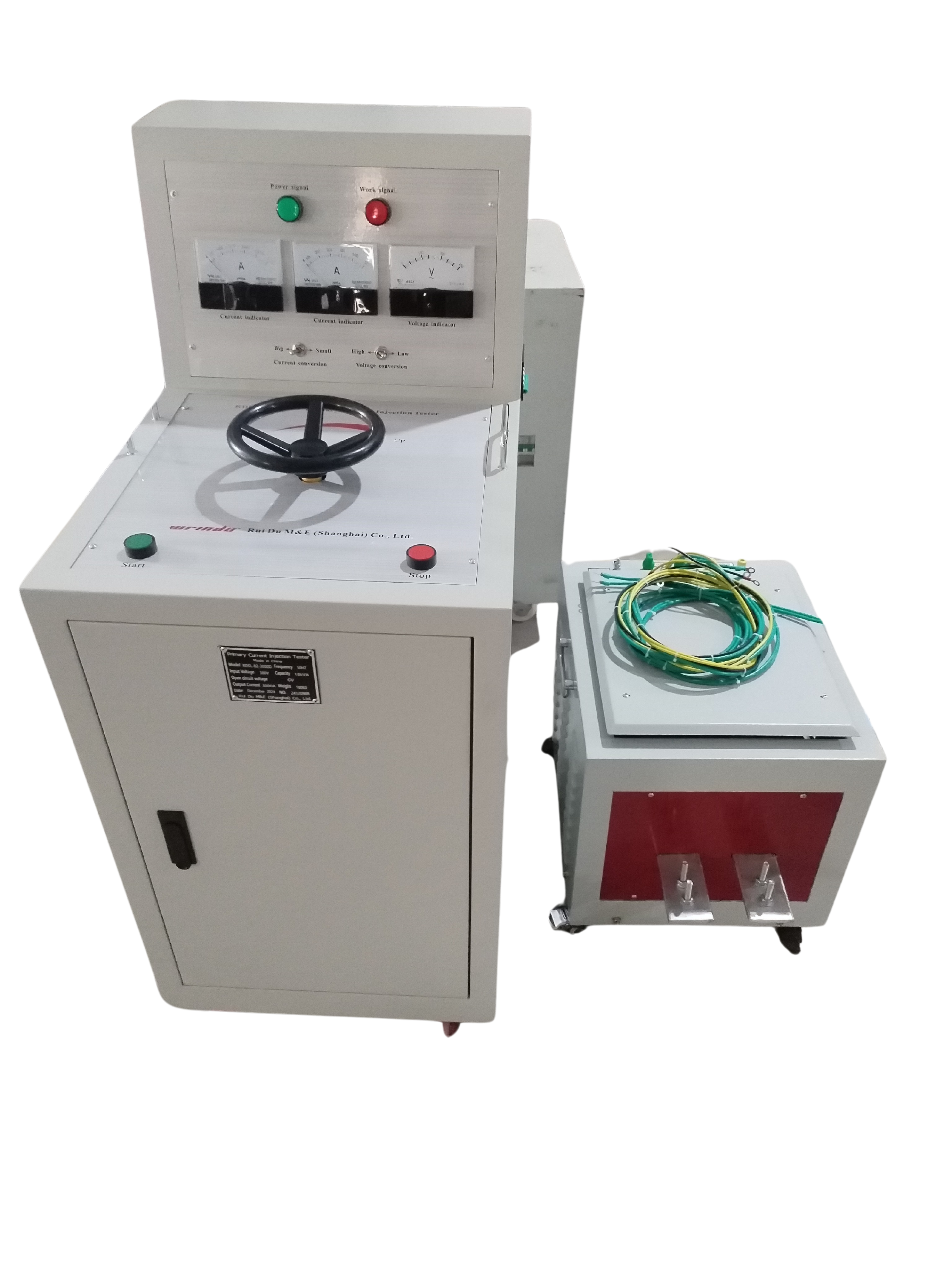
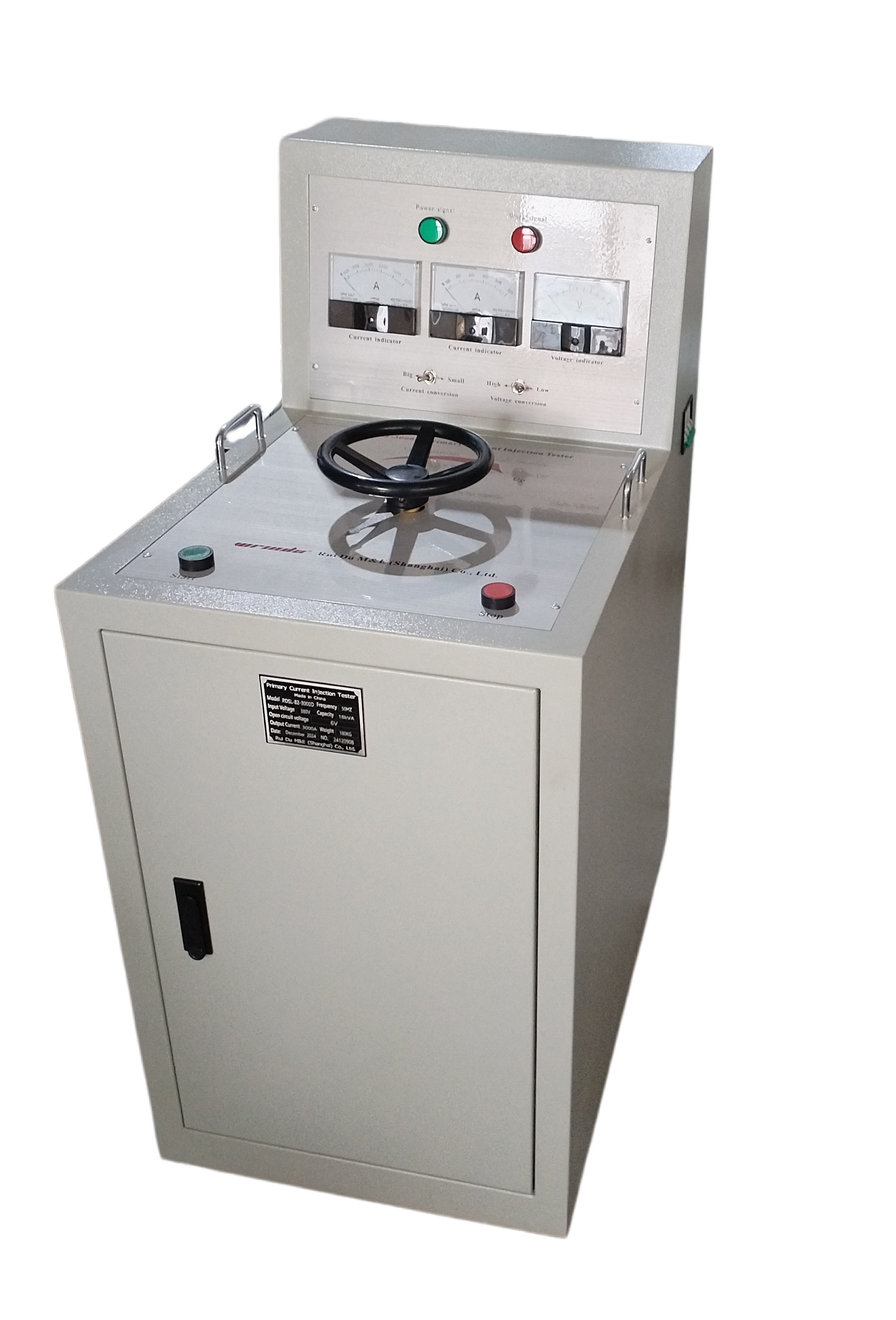
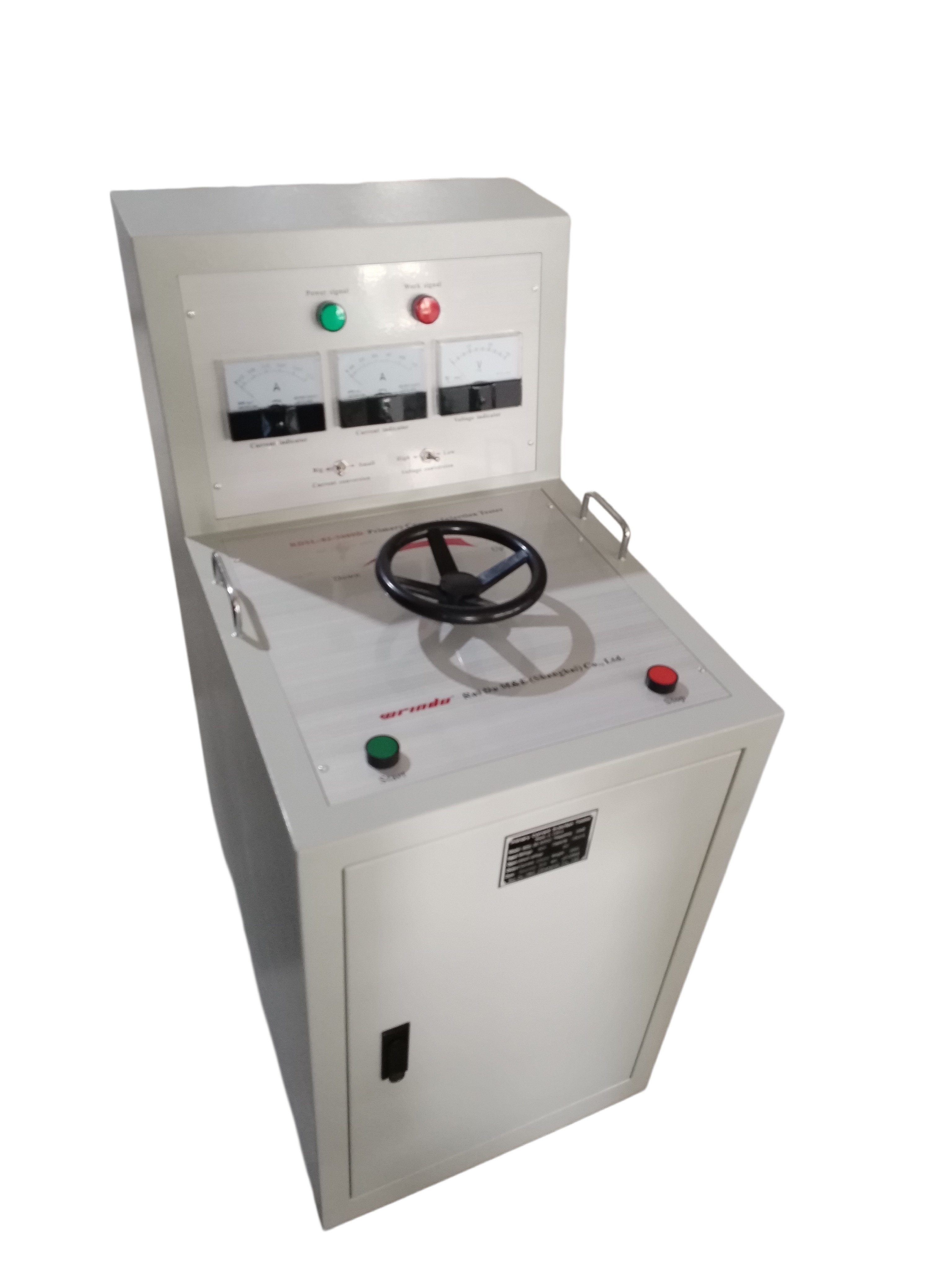
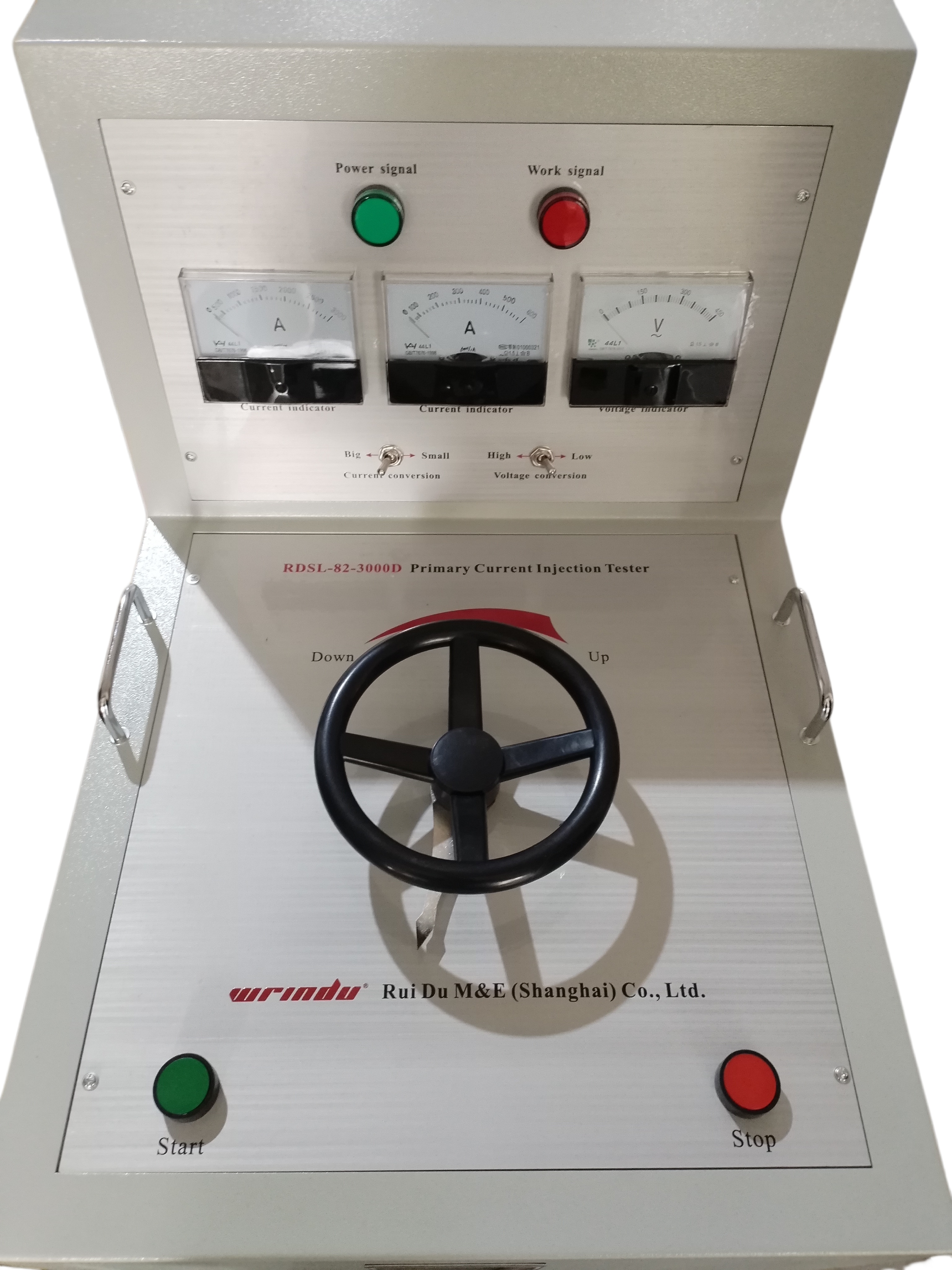
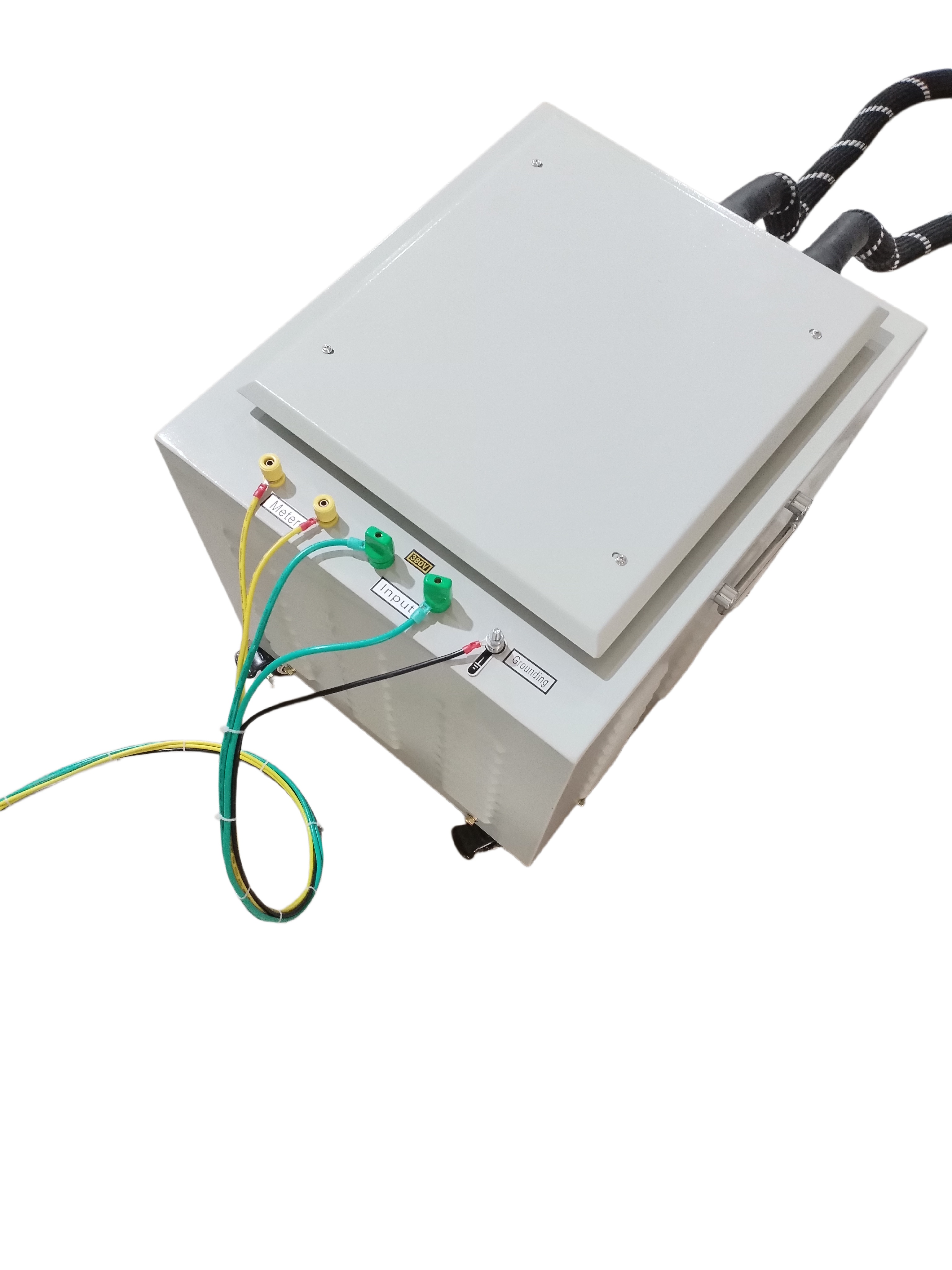
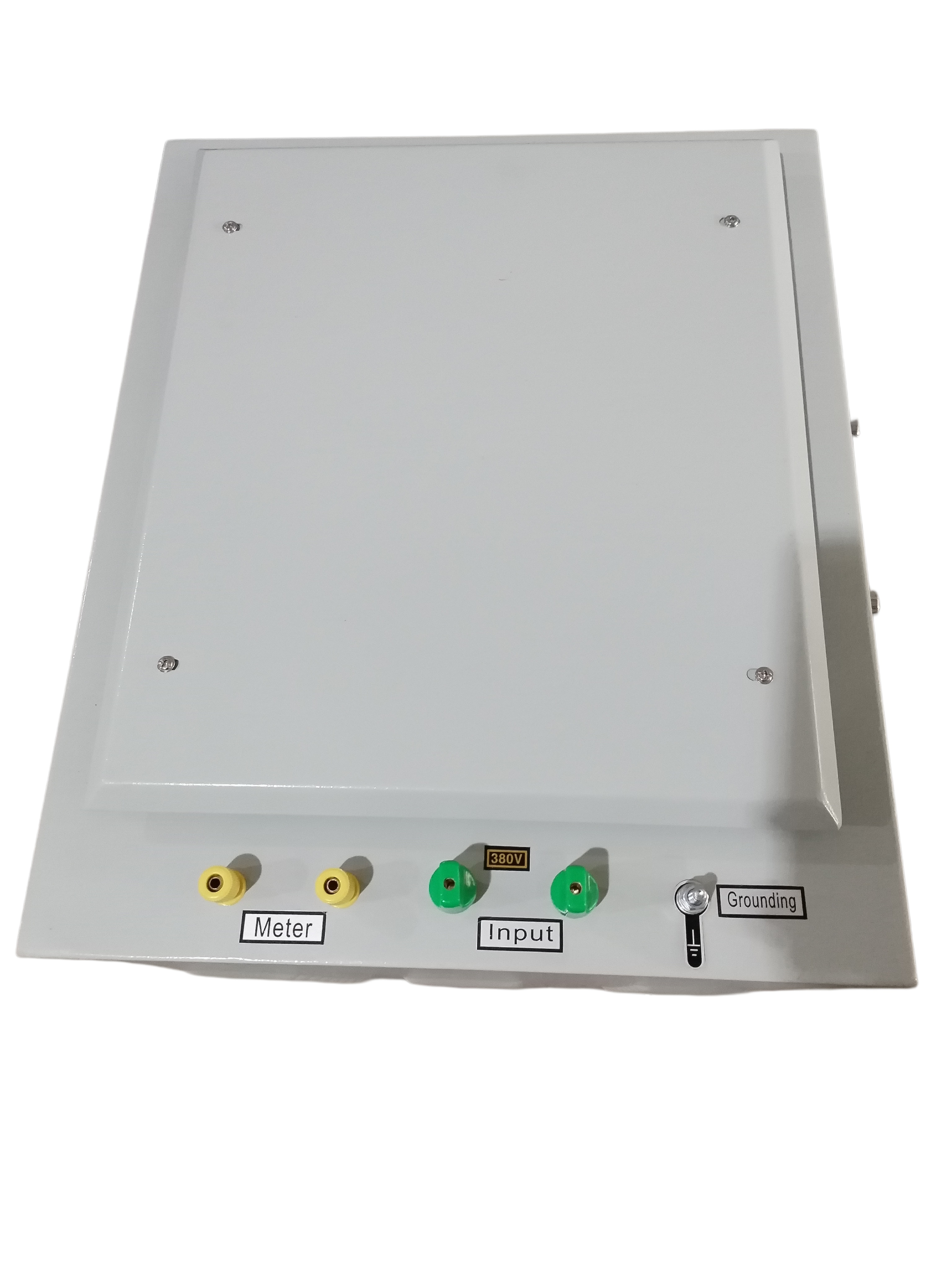
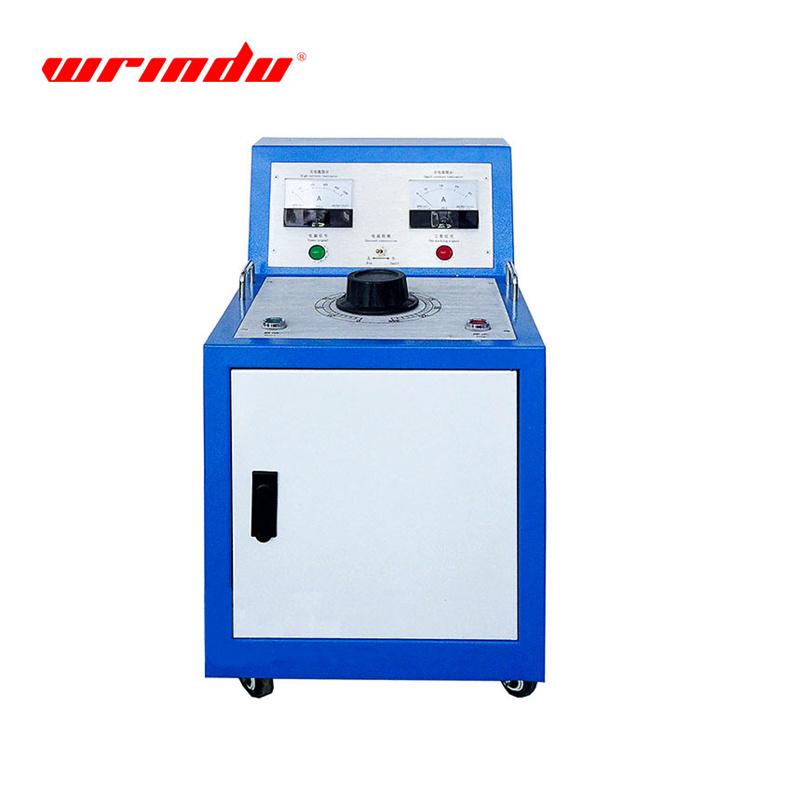
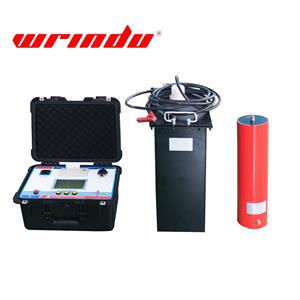
1. Equipped with two ammeters for large and small range current monitoring, providing flexible and accurate measurement.
2. Indicator light display and button operation make the device easy to use.
3. Designed for primary current injection testing in power plants, substations, and electrical equipment manufacturers.
4. Suitable for electrical debugging, scientific research, and laboratory applications.
5. Supports short-time and intermittent working conditions with reliable performance.
6. Compact size and lightweight design make it easy to transport and operate.
7. Simple maintenance and convenient operation improve field testing efficiency.
Product Specifications and Technical Parameters
| Parameter | Specification |
|---|
| Rated Capacity | 36 kVA |
| Input Voltage | AC 380 V, 50 Hz |
| Input Current | 95 A |
| Output Voltage | 6 V |
| Output Current | 6000 A |
| Structural Type | Split Type |
| Working System | Designed for a 5-minute short-time working system |
| Intermittent Working Condition | Power-on time should be less than 2.5 minutes |
| Working Cycle | Greater than 10 minutes |
FAQs
Q1: What equipment can be tested with a primary current injection system?
A:A primary current injection system can be used to test various electrical devices, including circuit breakers, current transformers, protection relays, switchgear, busbars, and other high-current electrical components.
Q2: What is the difference between primary injection testing and secondary injection testing?
A:Primary injection testing applies current directly to the main power circuit to simulate actual operating conditions, while secondary injection testing only applies signals to the protection relay input side. Primary injection provides a more complete evaluation of the entire protection system.
Q3: How long can a primary current injector operate continuously?
A:The operating time depends on the equipment design and working system. The RDSL-82 Series Primary Current Injector is designed for short-time or intermittent operation, with the working cycle determined by output current, capacity, and cooling conditions.
Q4: What factors should be considered when selecting a primary current injector?
A:Important factors include output current capacity, rated power, input voltage, working duration, structural design, measurement accuracy, and application requirements. Selecting the correct current range ensures reliable testing performance.
Q5: Why is a primary current injector necessary for electrical commissioning?
A:A primary current injector allows engineers to verify electrical equipment performance before operation. It helps confirm current flow paths, protection system response, and equipment reliability, improving safety and reducing unexpected failures.