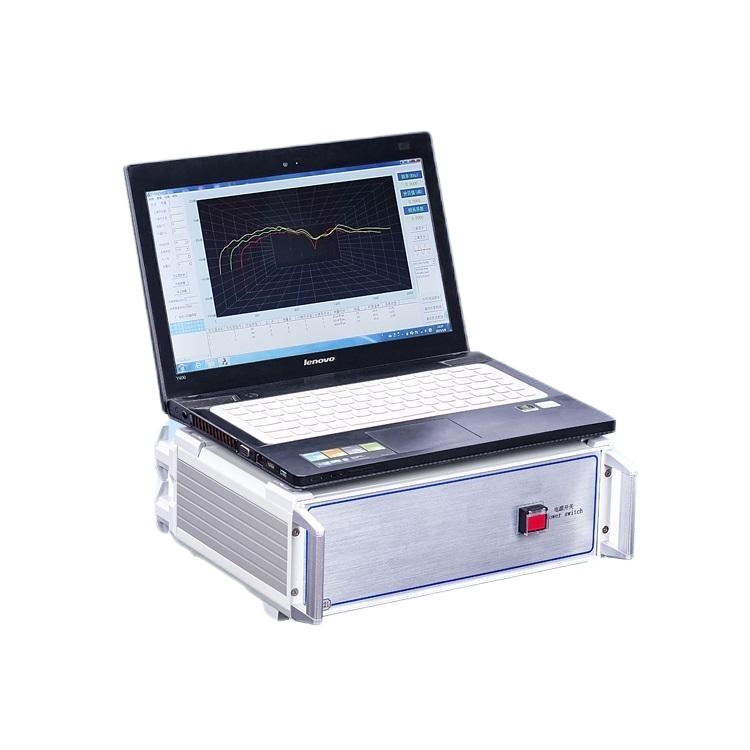
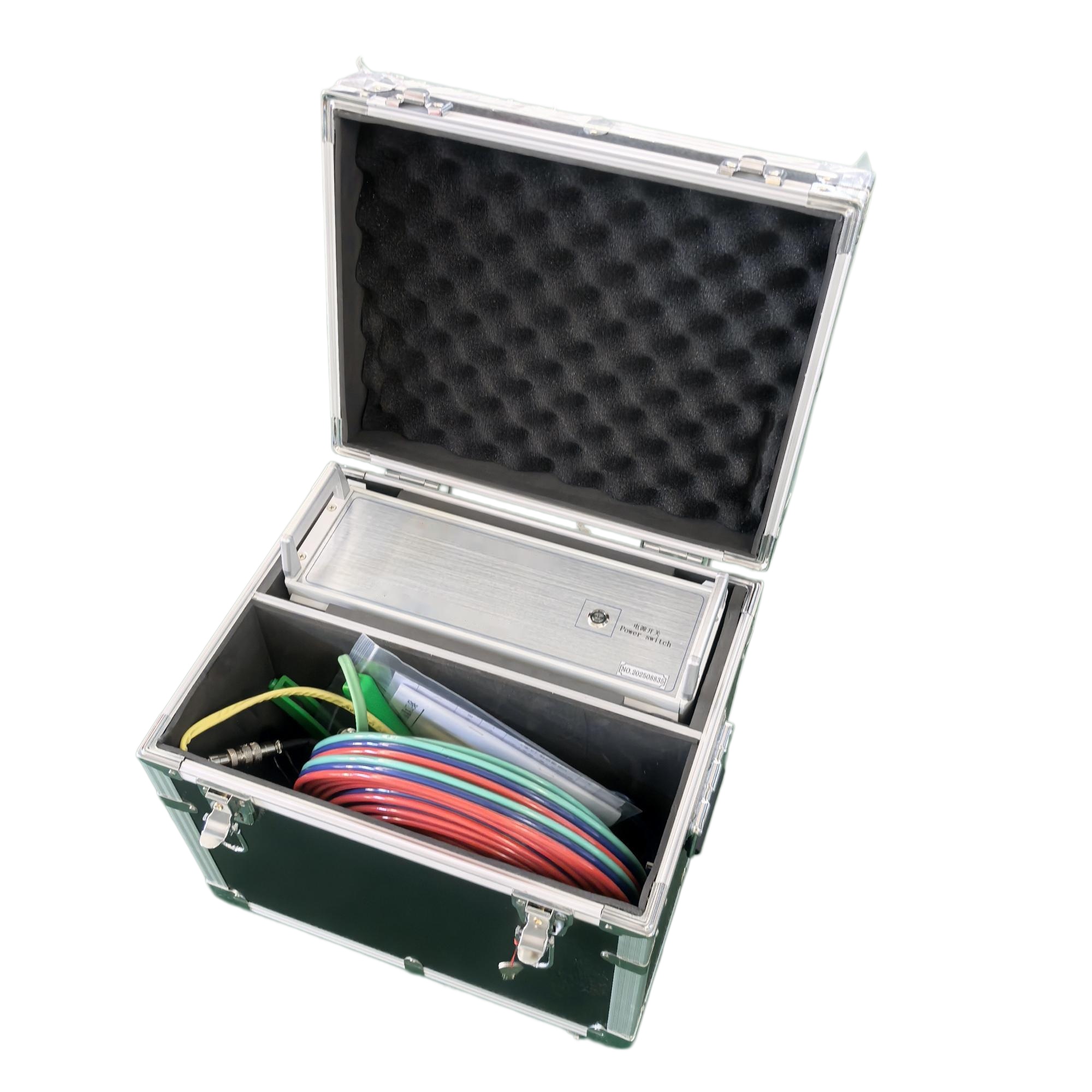
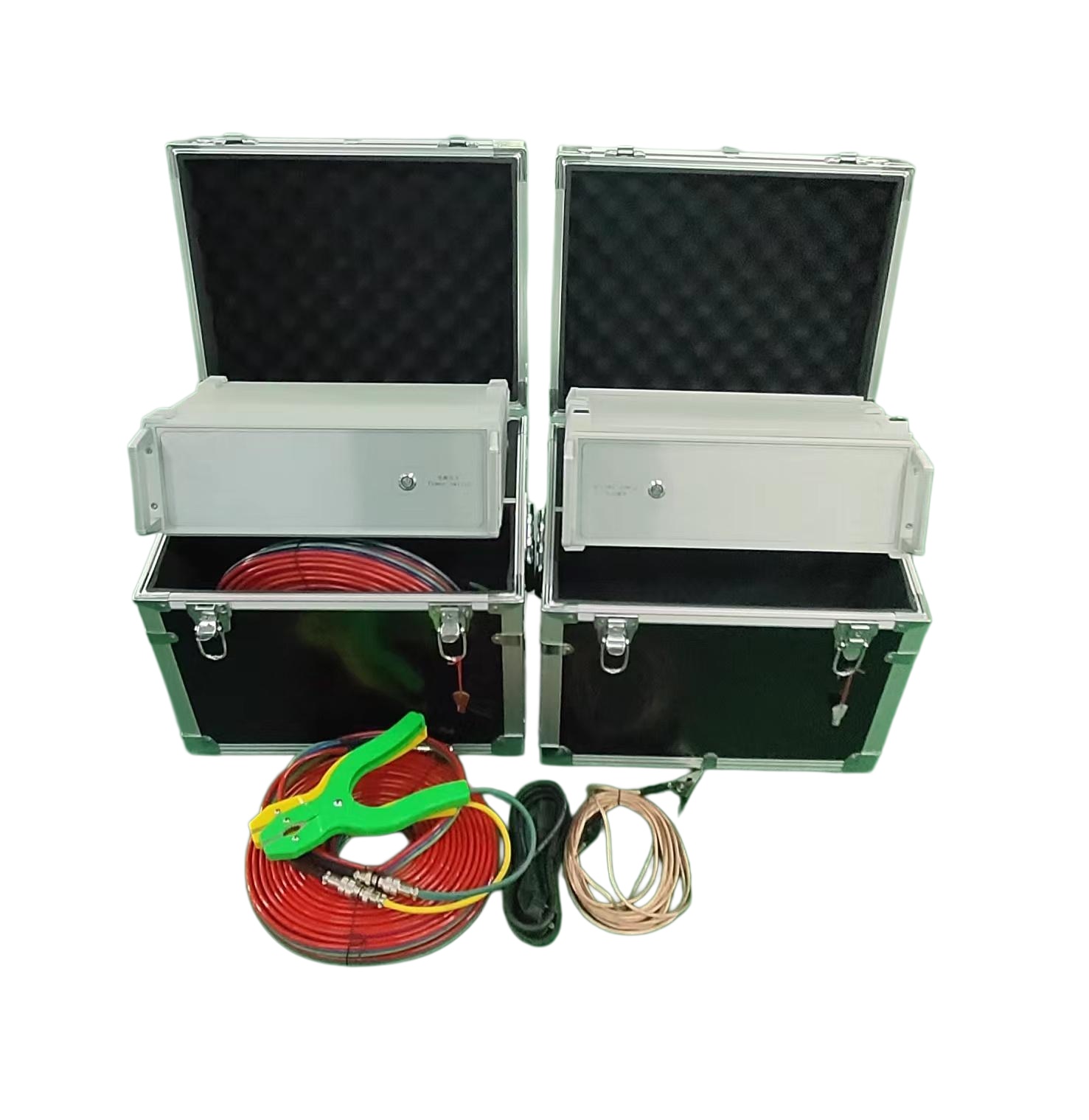
RDBX-H Sweep Frequency Response Analyzer

- Wrindu
- Shanghai, China
- about 10 working days
- 2000 set/month
- RDBX-H
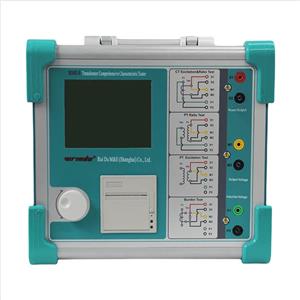
RDBX-H Transformer Frequency Response Analyzer (FRA) uses advanced frequency response analysis technology to detect internal transformer faults. By measuring the winding characteristic parameters, it can accurately identify changes in transformer winding structure and help evaluate the internal condition of power transformers.
During transportation, operation, or short-circuit faults, transformer windings may become deformed or displaced, causing changes in frequency response characteristics. RDBX-H can detect these changes and is suitable for internal fault diagnosis of 63kV–500kV power transformers.
Product Features
1. Hardware cassette mechanism adopts DDS (from America), can correctly detect the breakdown: distortion, swell, shift, tilt, inter-turn short circuit deformation and contacting short circuit inter-phase.
2. High-speed, dual channel, 16-bit A/D sampling (the wave from curve will change obviously if change the tapping switch during the field tests), use precision, high stability components, the same phase repeat test, measurement repetition rate >99.5%.
3. The device with two measurement system: linear scan and sectional scan.
4. In the process of testing, only the connecting bus of the transformer needs to be dismantled, and the transformer is not required to be suspended and disassembled.
5. When the transformer is measured, the signal input and output leads arbitrarily connect, which has no influence on the measurement results. The wiring personnel can stay on the transformer oil tank, and do not have to go down and lighten the labor intensity.
6. The amplitude frequency characteristics conform to the national technical index of the amplitude frequency characteristic tester. The abscissa (frequency) has: linear division and logarithmic, so the printed curve can be either a linear graduation curve or a logarithmic graduation curve, and the user can choose it according to actual needs.
7. The software can adjust the output signal range, the maximum amplitude peak±10V, auto adjust sample frequency.
8. The instrument has kinds of frequency linear sweep frequency measurement system measurement function. The linear scan frequency measurement max frequency is 2MHz. The frequency scanning interval are 0.25kHz, 0.5kHz and 1kHz, providing more analysis for transformer deformation.
9. To provide historical curve comparison and analysis, multiple historical curves can be loaded at the same time, and any curve can be selected for transverse and longitudinal analysis. Equipped with expert intelligent diagnosis system, it can automatically diagnose the state of transformer windings, load 6 curves at the same time, automatically calculate the relevant parameters of each curve, diagnose the deformation of windings automatically, and give the diagnostic conclusions.
10. The software management is powerful, fully considering the needs of on-site use, and automatically preserving environmental condition parameters, so as to provide basis for transformer winding deformation diagnosis. The measurement data is automatically analyzed, and the electronic document (Word) is saved, and it has the function of color printing to facilitate the user to produce the test report.
Product Specifications and Technical Parameters
| No. | Technical Parameter | Specification |
|---|---|---|
| 1 | Scanning Mode | Linear Scan: 1kHz–2MHz |
| 2 | Amplitude Measurement Range | -100dB to +20dB |
| 3 | Amplitude Measurement Accuracy | ±1dB |
| 4 | Scan Frequency Accuracy | 0.01% |
| 5 | Signal Input Impedance | 1MΩ |
| 6 | Signal Output Impedance | 50Ω |
| 7 | Same-Phase Repeatability | ≥99.5% |
FAQs
Q1: What is a transformer frequency response analyzer used for?
A: A transformer frequency response analyzer is used to detect winding deformation and internal faults by analyzing changes in the transformer's frequency response characteristics.
Q2: What types of transformer faults can the FRA tester detect?
A: It can detect winding deformation, displacement, distortion, inter-turn short circuits, and phase-to-phase short circuit faults.
Q3: What is the frequency scanning range of the FRA tester?
A: The linear scan range is 1kHz–2MHz, while the sectional scan range is 0.5kHz–1MHz with multiple frequency bands for detailed analysis.
Q4: Does the FRA test require transformer disassembly?
A: No. During testing, only the transformer connecting bus needs to be disconnected. There is no need to lift or dismantle the transformer.
Q5: How accurate is the transformer frequency response measurement?
A: The amplitude measurement accuracy is ±1dB, and the scan frequency accuracy is 0.01%, ensuring reliable test results.
Q6: What is the repeatability of the FRA tester?
A: The same-phase measurement repeatability is higher than 99.5%, providing stable and consistent test results.
Q7: What scanning modes does the FRA tester support?
A: The tester supports linear frequency sweep and sectional frequency sweep modes to meet different transformer testing requirements.
Q8: Can the FRA tester compare previous test results?
A: Yes. The software supports historical curve comparison and analysis to help identify changes in transformer winding conditions.
Q9: What is the signal input and output impedance of the FRA tester?
A: The signal input impedance is 1MΩ, and the signal output impedance is 50Ω.
Q10: Which transformers can use a frequency response analyzer?
A: It is mainly used for internal fault diagnosis of medium and high-voltage power transformers, including 63kV–500kV transformers.