What Is a Transformer Ratio and Why Is It Important?
A transformer ratio, also called a turns ratio or transformation ratio, describes the relationship between the voltage on the high-voltage side and the low-voltage side of a transformer.
Transformers are used in power systems to increase or reduce voltage levels. The transformer ratio determines how much the voltage changes during operation. It is one of the most important parameters used to evaluate transformer performance.
A correct transformer ratio helps ensure:
Stable voltage output
Safe transformer operation
Proper load distribution
Efficient power transmission
The transformer ratio is normally fixed during manufacturing and does not change under normal operating conditions.
How Is the Transformer Ratio Calculated?
The transformer ratio is calculated using the voltage and current relationship between the transformer windings.
K=U2/U1=I1/I2
Where:
K = transformer ratio
U₁ = voltage on one side of the transformer
U₂ = voltage on the other side
I₁ = current on one side
I₂ = current on the other side
When the voltage increases, the current decreases. When the voltage decreases, the current increases.
Engineers use ratio testing to verify whether the transformer winding ratio is correct and whether the transformer can operate safely.
Why Is Transformer Ratio Testing Necessary?
Transformer ratio testing is an important preventive maintenance test for power transformers.
It is commonly performed:
During transformer manufacturing
Before transformers are put into service
During routine maintenance inspections
After repairs or transportation
Ratio testing helps engineers:
Check whether the winding ratio is correct
Detect turn-to-turn short circuits
Verify tap changer condition
Confirm parallel operation capability
Identify winding or connection problems
Accurate ratio testing improves transformer reliability and reduces unexpected failures.
How Does the Wrindu RDB-II TTR Tester Improve Transformer Testing?
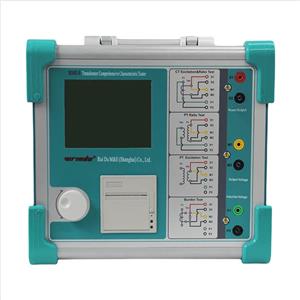
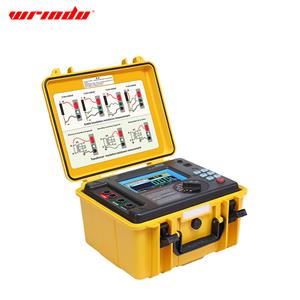
The Wrindu RDB-II Transformer Turns Ratio Tester is designed to provide faster, more accurate, and easier transformer ratio testing compared with traditional ratio bridge methods.
Key Features of the Wrindu RDB-II
Uses a three-phase precision inverter power supply to reduce harmonic interference and improve measurement accuracy
Supports fast three-phase testing and automatically identifies transformer connection groups (0–11)
Suitable for many transformer types, including rectifier, grounding, phase-shifting, Z-type, and electric furnace transformers
Includes multiple protection functions, such as reverse connection protection, short-circuit protection, and tap changer protection
Automatically measures transformer ratio, ratio error, and tap changer position, supporting up to 99 tap positions
Equipped with a 7-inch HD color touch screen for simple operation
Supports printing, USB storage, RS232 communication, and APP data management
Rugged waterproof and shock-resistant design for outdoor field testing
Main Technical Specifications
Test Range: 0.9–10000
Accuracy:
±0.1%+2 words (0.9–500)
±0.2%+2 words (501–2000)
±0.5%+2 words (2001–10000)
Resolution: 0.0001
Power Supply: AC220V ±10%, 50Hz
Operating Temperature: -10°C to 40°C
Relative Humidity: ≤85% (non-condensing)
Size: 360 × 290 × 170 mm
Weight: Main unit 5.9 kg, cable box 5.7 kg
Click to know more about Wrindu TTR Tester.
What Applications Use Transformer Ratio Testers?
Transformer turns ratio testers are widely used in:
Power plants
Substations
Transformer manufacturers
Power distribution systems
Industrial electrical maintenance
Renewable energy systems
They are essential tools for transformer inspection, maintenance, and commissioning.
FAQs
What does a transformer ratio test measure?
A transformer ratio test measures the voltage ratio between transformer windings to confirm correct transformer performance.
Why is transformer ratio testing important?
It helps detect winding faults, tap changer problems, and incorrect connections before major failures occur.
Can a transformer turns ratio tester detect short circuits?
Yes. Ratio testing can help identify turn-to-turn short circuits and winding abnormalities.
What causes transformer ratio errors?
Common causes include winding damage, tap changer failure, poor connections, or manufacturing defects.
What types of transformers can the Wrindu RDB-II test?
The tester supports power transformers, rectifier transformers, grounding transformers, phase-shifting transformers, Z-type transformers, and more.
Is the Wrindu RDB-II suitable for field testing?
Yes. Its waterproof, shock-resistant design and touch-screen interface make it ideal for on-site transformer testing.
How accurate is the Wrindu RDB-II transformer ratio tester?
The tester provides measurement accuracy up to ±0.1% depending on the test range.