What Does BDV Mean in Electrical Engineering?
BDV stands for Breakdown Voltage, a key parameter in electrical engineering, power systems, and insulation materials. It refers to the minimum voltage level at which an insulating material fails and becomes electrically conductive.
When this threshold is reached, the insulation can no longer withstand the electric stress, resulting in a sudden discharge—such as a spark, arc, or complete dielectric failure.
What Happens When Breakdown Voltage Is Reached?
At the moment BDV is exceeded, the insulating medium (oil, air, gas, or solid insulation) loses its resistance to current flow. This leads to:
A rapid increase in current
Formation of an arc or spark
Potential damage to equipment
Risk of insulation collapse or system failure
In high-voltage systems, this event is dangerous and often leads to costly downtime if not prevented.
Why Is BDV Important in Power Systems?
Understanding what BDV is helps engineers evaluate the reliability of insulation systems. A higher breakdown voltage generally indicates:
Better insulation quality
Lower contamination levels
Improved system safety
Conversely, a low BDV suggests the presence of moisture, dirt, or degradation, which can significantly increase the risk of failure.
How Is BDV Used in Transformer Oil Testing?
Why Perform a BDV Test on Transformer Oil?
Transformer oil serves two critical roles Electrical insulation and Heat dissipation (cooling).
Over time, contaminants such as water, dust, and carbon particles reduce its insulating strength. Measuring BDV helps determine whether the oil is still fit for service.
How Is a BDV Test Conducted?
The standard BDV test process includes:
Taking a representative oil sample
Pouring it into a test cell with two electrodes at a fixed gap
Gradually increasing voltage across the electrodes
Observing the voltage at which an electrical arc occurs
The recorded value is the Breakdown Voltage of the oil.
What Do BDV Test Results Indicate?
High BDV (e.g., > 60 kV): Clean, dry, and reliable oil
Moderate BDV (40–60 kV): Acceptable but may require monitoring
Low BDV (< 40 kV): Contaminated oil—filtration or replacement recommended
These values can vary depending on standards like IEC or ASTM, but the principle remains the same.
What Factors Affect Breakdown Voltage?
Several variables influence BDV results:
Moisture content – even small amounts drastically reduce BDV
Solid particles – dust, fibers, or metallic debris
Oil aging and oxidation
Electrode condition and spacing
Temperature of the sample
Proper testing procedures are essential to ensure accurate and repeatable results.
How Can Low BDV Be Improved?
If BDV is below acceptable limits, corrective actions include:
Oil filtration and dehydration
Vacuum oil treatment
Replacing severely degraded oil
Improving sealing to prevent moisture ingress
Routine monitoring helps avoid unexpected transformer failures.
FAQs
What is BDV in transformer oil testing?
BDV in transformer oil testing refers to the voltage at which the oil loses its insulating ability and allows electrical breakdown to occur.
Why is BDV important for transformer maintenance?
BDV indicates the insulation strength of the oil. Low BDV means higher risk of faults, making it a critical parameter for preventive maintenance.
What is a good BDV value for transformer oil?
Typically, a BDV above 60 kV is considered good, but acceptable values depend on the testing standard and voltage class of the transformer.
How often should BDV testing be performed?
It depends on operating conditions, but utilities commonly perform BDV tests annually or during routine maintenance cycles.
What causes low BDV in insulating oil?
Common causes include moisture contamination, oxidation, dissolved gases, and suspended particles.
Is BDV the same as dielectric strength?
Yes, BDV is a practical measurement of dielectric strength under specific test conditions.
How Do Wrindu Oil Dielectric Strength Testers Stand Out?
When it comes to accurate BDV (Breakdown Voltage) testing, the Wrindu RDJJD-100kV Oil Dielectric Strength Tester is designed to deliver both precision and reliability in demanding industrial environments such as power systems, railways, and petrochemical plants.
What Makes Wrindu RDJJD-100kV More Reliable?
Unlike conventional testers, this model is powered by a high-capacity single-chip microcomputer, ensuring stable operation and high measurement accuracy even in electrically noisy environments. The built-in wide-range watchdog circuit actively prevents system crashes, making it highly dependable for continuous field use.
How Does It Improve Measurement Accuracy?
Wrindu integrates a unique high-voltage sampling design, allowing test data to be directly fed into the A/D converter. This eliminates errors typically introduced by analog circuits and significantly enhances result precision.
Output voltage range: 0–100 kV
Voltage accuracy: ±2% (reading) + 2 digits
Power distortion rate: < 1%
These specifications ensure that every BDV reading reflects the true dielectric strength of the oil.
How Flexible Is the Testing Process?
The RDJJD-100kV is built for adaptability, supporting both IEC156 standard testing and custom programmable modes, making it suitable for various international and project-specific requirements.
Key adjustable parameters include:
Step-up voltage speed: 0.5 kV/s to 5.0 kV/s (10 selectable levels)
Test cycles: 1–9 times
Static discharge time: 0–9000 seconds
Interval rest time: 0–900 seconds
Mixing time: 0–250 seconds
This flexibility allows engineers to tailor test procedures based on oil condition, standards, and site requirements.
What Design Features Enhance Durability and Safety?
Wrindu focuses heavily on both safety and long-term durability:
Oil cup made of special glass and polymer materials to prevent leakage and corrosion
Built-in over-voltage, over-current, and short-circuit protection
Strong anti-interference capability and EMC performance for stable readings
Booster capacity: 1.5 kVA, ensuring consistent high-voltage output
These features ensure the instrument operates safely even under harsh industrial conditions.
How Does It Improve User Experience?
The tester is designed with usability in mind:
Dual-language interface (Chinese/English) for global users
Integrated temperature, humidity, and clock display
Optional infrared oil temperature measurement
Built-in data analysis function to assist in oil condition evaluation
This combination of automation and intelligent diagnostics reduces manual workload and improves decision-making efficiency.
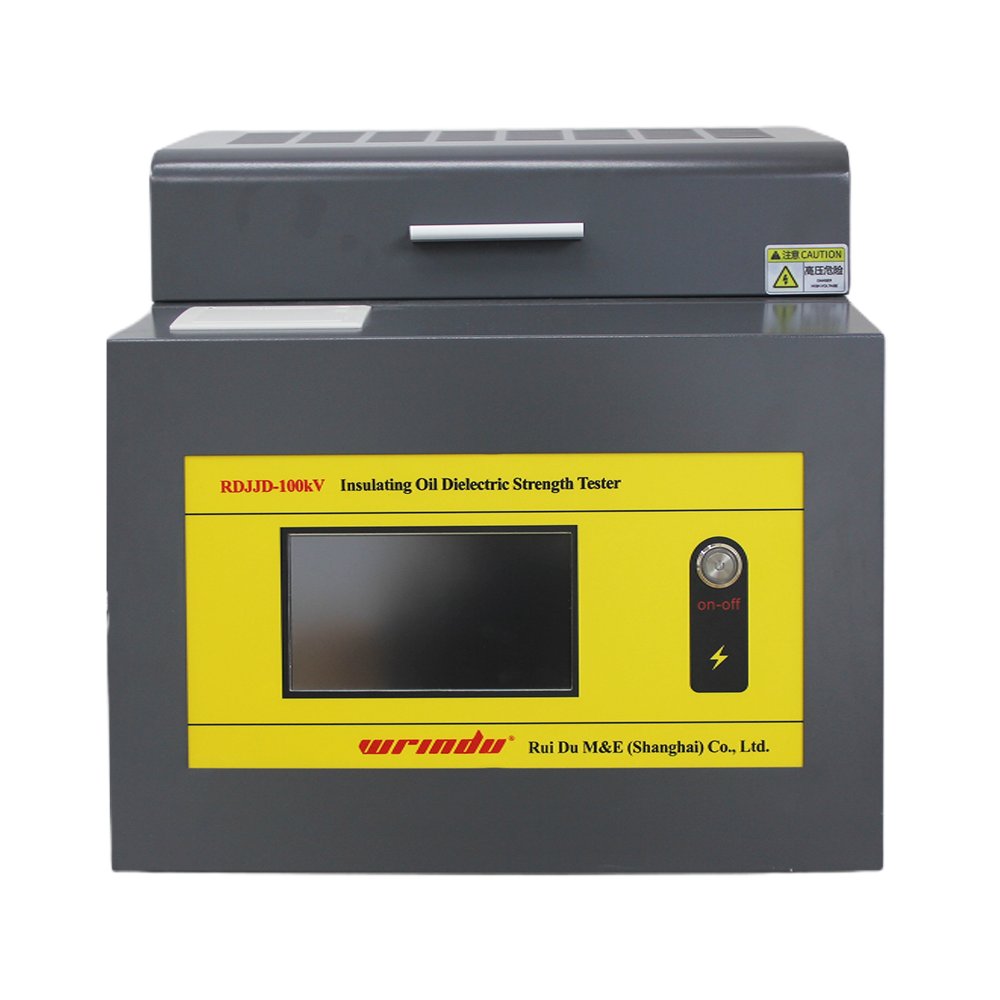
Click the blue font to know more about Wrindu Oil BDV Tester.