CT and PT Analyzer: Complete Guide to CT & PT Testing | Wrindu
Current transformers (CTs) and potential transformers (PTs), also called voltage transformers (VTs), are important parts of modern power systems. They help measure high voltage and current and provide signals for protection, monitoring, and control systems.
A CT and PT analyzer is a test instrument used to check the performance and key characteristics of these transformers. It can help engineers find problems with ratio, polarity, excitation characteristics, winding resistance, burden, and accuracy.
For utilities, substations, switchgear manufacturers, and electrical maintenance teams, reliable CT and PT testing is important for safe and stable system operation.
What Is a CT and PT Analyzer?
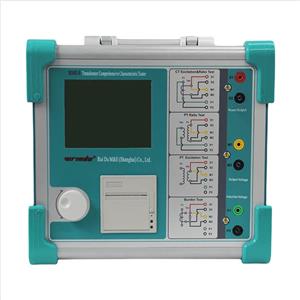
A CT and PT analyzer is a multifunctional test device designed to test current transformers and voltage transformers.
A CT analyzer mainly checks the performance of current transformers, while a PT analyzer checks voltage or potential transformers. A combined CT and PT analyzer can perform both types of tests with one instrument.
| Transformer | Test Item | What It Checks |
|---|---|---|
| CT | Excitation Characteristics | Checks the CT core excitation performance |
| Knee Point Voltage & Current | Identifies the CT saturation point | |
| Ratio & Polarity | Checks the transformation ratio and terminal polarity | |
| Secondary Winding Resistance | Checks the resistance of the CT secondary winding | |
| Secondary Burden | Measures the load connected to the CT secondary circuit | |
| Ratio Error & Phase Displacement | Evaluates CT measurement accuracy | |
| PT | Ratio & Polarity | Checks the PT transformation ratio and polarity |
| Excitation Characteristics | Checks the PT excitation performance | |
| Secondary Winding Resistance | Measures the PT secondary winding resistance | |
| Ratio Error & Phase Displacement | Evaluates PT measurement accuracy |
An automatic analyzer can also calculate important parameters and generate test reports, which makes field testing faster and easier.
What Tests Can a CT and PT Analyzer Perform?
CT Excitation and Knee Point Test
The excitation test checks how a current transformer responds as the secondary voltage increases. The test can help identify the knee point of the CT.
The knee point voltage is an important parameter for protection-class CTs. It shows the point where the CT core starts to move into a strong saturation area.
The Wrindu RDHG-E uses a low-frequency test method and can perform CT knee point testing up to 30 kV.
CT Ratio and Polarity Test
CT ratio testing checks whether the actual transformation ratio matches the required value.
Polarity testing checks whether the CT terminals are correctly connected. Incorrect polarity can cause problems in protection and measurement circuits.
The RDHG-E supports a CT ratio measurement range of 1–10000 with an accuracy of ±0.2%.
CT Secondary Resistance and Burden Test
Secondary winding resistance is an important CT parameter. High or abnormal resistance may indicate a connection or winding problem.
The analyzer can also measure the AC burden connected to the CT secondary circuit. The RDHG-E supports a resistance range of 0–300 Ω and an AC burden range of 0–300 VA.
PT Ratio and Polarity Test
A PT or VT analyzer checks the transformation ratio and polarity of voltage transformers.
These tests help confirm that the PT provides the correct signal to measuring and protection equipment.
Ratio Error and Phase Displacement Test
A CT and PT analyzer can evaluate ratio error and phase displacement. These results help engineers understand the accuracy of the transformer under test.
The RDHG-E provides phase measurement accuracy of ±3 minutes with a resolution of 0.3 minutes.
How Does a CT and PT Analyzer Work?
Modern CT and PT analyzers use digital control and automatic measurement technology to simplify testing.
The RDHG-E uses high-performance DSP and FPGA technology. It can automatically control the test process, measure electrical values, calculate test parameters, and display the results.
Its variable-frequency and low-frequency testing method can reduce the test requirements compared with traditional methods based only on voltage regulators, voltage boosters, and current boosters.
After testing, users can save the results, transfer data through USB, and generate reports for further analysis.
What Types of CT and PT Can Be Tested?
A CT analyzer can be used for different types of current transformers.
Typical applications include:
Toroidal or ring-type CTs
Bar-type CTs
CTs installed in transformers
CTs installed in oil-filled circuit breakers
CTs installed in switchgear
A suitable CT and PT analyzer can also test different PT or VT applications.
The term MVCT is also used in the market for multifunctional current transformer test equipment. When comparing an MVCT tester with a CT analyzer, users should focus on the actual test functions, measurement range, accuracy, and application rather than the product name alone.
How to Choose a CT and PT Analyzer?
Before selecting a CT and PT tester, engineers should check the actual testing requirements.
Check the Test Functions
Make sure the analyzer supports the CT and PT tests you need, such as excitation, ratio, polarity, resistance, burden, and phase measurement.
Check the Measurement Range and Accuracy
The measurement range should match the transformers being tested. Accuracy is also important when testing protection and measurement transformers.
Check the Knee Point Capability
For protection CT testing, check the maximum knee point voltage supported by the analyzer.
Check Data and Report Functions
Automatic data storage, USB transfer, and report generation can save time during field testing.
Check Portability
For substation and maintenance work, a lightweight analyzer can make transportation and on-site testing easier.
Why Choose the Wrindu RDHG-E CT and PT Tester?
The Wrindu RDHG-E Variable Frequency Transformer Comprehensive Tester is designed for CT and PT testing in power industry applications.
It combines multiple test functions in one portable instrument and can automatically complete common CT and PT tests.
Key specifications include:
| Parameter | RDHG-E |
|---|---|
| Test Purpose | CT and PT |
| Output | 0–180 Vrms, 12 Arms, 36 A peak |
| Voltage Accuracy | ±0.1% |
| CT Ratio Range | 1–10000 |
| CT Ratio Accuracy | ±0.2% |
| PT Ratio Range | 1–10000 |
| PT Ratio Accuracy | ±0.2% |
| Resistance Range | 0–300 Ω |
| AC Burden Range | 0–300 VA |
| Knee Point Test | Up to 30 kV |
| Data Storage | 1000 groups |
| Power Supply | AC 220 V ±10%, 50 Hz |
| Working Temperature | -10°C to 50°C |
The RDHG-E also provides a graphical LCD interface, built-in printer, USB data transfer, automatic report generation, and one-click testing functions.
FAQs
What is a CT and PT analyzer?
A CT and PT analyzer is a test instrument used to check the performance and electrical characteristics of current transformers and voltage transformers.
What is an MVCT tester?
An MVCT tester is a multifunctional instrument used for current transformer testing. The exact functions depend on the specific equipment model.
What tests can a CT analyzer perform?
A CT analyzer can perform tests such as excitation, knee point, ratio, polarity, secondary resistance, burden, ratio error, and phase displacement testing.
What is CT knee point voltage?
CT knee point voltage is the point where the CT core begins to enter a strong saturation area during an excitation test.
Can one analyzer test both CT and PT?
Yes. A multifunctional CT and PT analyzer, such as the RDHG-E, can test both current transformers and potential or voltage transformers.
How do you test CT ratio and polarity?
The CT is connected to the analyzer according to the test circuit. The analyzer then applies the required test signal and automatically measures the ratio and polarity.
Why is CT secondary resistance testing important?
Secondary resistance testing can help identify abnormal winding or connection conditions and provides useful information about the CT secondary circuit.
What should I consider when choosing a CT and PT tester?
Check the required test functions, measurement range, accuracy, knee point capability, data storage, report functions, portability, and applicable testing requirements.
Click to know more about Wrindu CT and PT Analyzer.
Related Articles Recommened:
Complete Guide for CT and PT Testing Procedure.
What Is a CT Magnetization Curve Test and How Does It Work?