Wrindu Cable Fault Testing System vs European Brands: Performance Comparison
Cable faults can cause unexpected power interruptions, equipment damage, and costly maintenance delays. For power utilities, cable manufacturers, and maintenance companies, choosing a reliable cable fault testing system is essential for quickly identifying fault locations and restoring power.
Today, many international suppliers provide cable fault location equipment, including well-known European brands. However, users are increasingly looking for solutions that combine high testing performance, easy operation, and reasonable investment costs.
Wrindu RDCD-II and RDCD-III Cable Fault Testing Systems are designed to meet these requirements. By combining advanced fault location technology, high accuracy measurement, and practical field operation features, Wrindu provides a reliable alternative for customers who need professional cable fault diagnosis solutions.
Click to know more about RDCD-III cable fault testing systems.
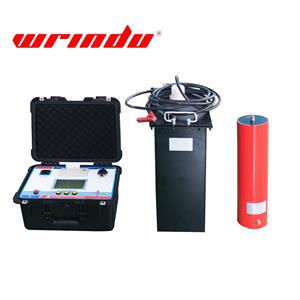
Click to know more about 3-in-one VLF Hipot Tester.
Why Is a Reliable Cable Fault Testing System Important?
Underground and high-voltage cables are widely used in power distribution networks, industrial facilities, renewable energy projects, and urban infrastructure.
When cable insulation fails, common problems include:
Cable short circuits
High resistance faults
Cable open circuit faults
Insulation breakdown
Underground cable damage
Without accurate testing equipment, engineers may spend a long time searching for the fault point, increasing maintenance costs and power outage time.
A professional cable fault testing system helps engineers:
Quickly locate cable faults
Reduce excavation areas
Improve repair efficiency
Lower maintenance costs
What Are Wrindu RDCD-II and RDCD-III Cable Fault Testing Systems?
Wrindu RDCD-II and RDCD-III are complete cable fault diagnosis systems developed for power cable testing applications.
They are mainly used for:
Distance measurement of cable faults
Cable route detection
Precise fault point location
Low resistance fault testing
High resistance leakage fault testing
High resistance flashover fault detection
Both systems can be applied to power cables up to 35kV, as well as various underground cables, communication cables, and special cable networks.
What Are the Differences Between Wrindu RDCD-II and RDCD-III?
Although both systems are designed for professional cable fault detection, they are suitable for different application requirements.
| Feature | RDCD-II Cable Fault Testing System | RDCD-III Cable Fault Testing System |
|---|---|---|
| Main Application | Comprehensive cable fault location | Advanced intelligent cable diagnosis |
| Fault Types | Low resistance, short circuit, open circuit, high resistance faults | Low resistance, high resistance, flashover and grounding faults |
| Maximum Testing Distance | Up to 60 km | Up to 100 km |
| Fault Location Accuracy | Up to 0.1 m | Up to ±0.2 m |
| Testing Methods | Low voltage pulse, high voltage flashover, multiple pulse | Low voltage pulse, impulse current, multiple pulse |
| Operation System | Industrial computer control | Intelligent touchscreen operation |
| Data Management | Waveform storage and test reports | Remote data transmission and APP support |
| Application Level | Utilities and maintenance companies | Large utilities, EPC projects, advanced testing applications |
The RDCD-II provides a complete and reliable solution for general cable fault testing, while the RDCD-III adds more intelligent functions for complex testing environments.
How Does Wrindu Compare with European Cable Fault Testing Brands?
European brands have developed advanced cable testing technologies and are widely recognized in the global market.
However, many customers now consider not only technical performance but also:
Total equipment cost
Maintenance convenience
Spare parts availability
Customized service
Delivery time
Wrindu focuses on providing a balanced solution with professional performance and competitive value.
| Comparison Item | Wrindu RDCD-II / RDCD-III | European Brands |
|---|---|---|
| Fault Detection Capability | Supports low resistance, high resistance, flashover and open circuit faults | Supports various cable fault tests |
| Testing Distance | Up to 60 km / 100 km depending on model | Usually suitable for long-distance testing |
| Accuracy | High precision fault location technology | High precision measurement |
| Operation | Touchscreen and intelligent software control | Professional operation interface |
| Language Support | English, Russian, customized languages available | Mainly international language support |
| Customization | OEM customization available | Usually limited customization |
| Delivery Time | Around 25 days | Longer delivery cycles in many cases |
| Cost Performance | High performance-to-cost ratio | Higher investment cost |
Wrindu provides similar professional testing functions while helping customers reduce initial investment and improve project efficiency.
Wrindu RDCD-II vs RDCD-III: Which One Should Customers Choose?
Different users have different testing requirements.
RDCD-II Is Suitable For:
Power maintenance companies
Distribution network operators
Cable repair teams
General underground cable fault testing
Main advantages:
Complete testing functions
Reliable fault location performance
Easy field operation
Suitable for daily maintenance work
RDCD-III Is Suitable For:
Large power utilities
High-voltage cable projects
EPC contractors
Professional cable testing service providers
Main advantages:
Longer testing distance
More intelligent operation
Remote communication functions
Improved fault analysis capability
For customers requiring advanced cable diagnosis and large-scale testing, RDCD-III provides more powerful functions.
Why Is Wrindu Cable Fault Testing System a Cost-Effective Choice?
When selecting cable testing equipment, purchase price is only one factor.
The total value also depends on:
Testing efficiency
Equipment reliability
Operation time
Maintenance requirements
Technical support
Wrindu cable fault testing systems provide:
High Testing Accuracy
Advanced waveform analysis and fault location technology help engineers identify fault points accurately.
Multiple Testing Methods
The systems support different testing technologies, including:
Low voltage pulse method
High voltage impulse method
Multiple pulse method
Acoustic magnetic positioning
Easy Field Operation
Industrial touchscreens, portable designs, and intelligent software make testing easier for operators.
Flexible Customization
Wrindu supports OEM customization for different markets, including:
English
Russian
Spanish
French
Turkish
How Do Wrindu Cable Fault Systems Help Power Utilities?
For utilities, reducing outage time is a major priority.
Wrindu systems help improve maintenance efficiency by:
Finding underground cable faults faster
Reducing unnecessary excavation
Improving repair planning
Supporting preventive maintenance
With accurate fault location, engineers can repair damaged cables more efficiently and restore power supply faster.
Why Are More Customers Choosing Chinese Cable Testing Manufacturers?
In recent years, global customers have shown increasing interest in Chinese electrical testing manufacturers.
The main reasons include:
Competitive pricing
Advanced manufacturing technology
Faster production
Flexible customization
Strong export experience
Wrindu combines engineering experience with modern production technology to provide professional cable fault testing solutions for international customers.
Conclusion: Wrindu Provides Reliable Cable Fault Testing Solutions
Cable fault location plays an important role in maintaining safe and stable power systems.
Compared with traditional fault searching methods, modern cable fault testing systems help engineers save time, reduce maintenance costs, and improve repair accuracy.
Wrindu RDCD-II and RDCD-III Cable Fault Testing Systems provide reliable performance, intelligent operation, and competitive value for utilities, contractors, and cable service providers worldwide.
By combining advanced technology with practical engineering needs, Wrindu helps customers build more efficient cable fault diagnosis systems.
FAQs
What types of cable faults can Wrindu systems detect?
Wrindu RDCD-II and RDCD-III can detect low resistance faults, short circuits, open circuits, high resistance leakage faults, and high resistance flashover faults.
What is the maximum testing distance of Wrindu cable fault locators?
The RDCD-II can test cable distances up to 60 km, while the RDCD-III can support testing distances up to 100 km depending on application conditions.
What is the difference between RDCD-II and RDCD-III?
RDCD-II is designed for reliable and practical cable fault testing, while RDCD-III provides more intelligent functions and is suitable for complex high-voltage cable projects.
Can Wrindu cable fault testing systems replace European brands?
Wrindu systems provide professional cable fault location functions with competitive cost, flexible customization, and strong technical support, making them a practical choice for many global users.
Are Wrindu cable fault testers suitable for underground cables?
Yes. Wrindu systems are designed for underground cable route detection, fault distance measurement, and precise fault point location.
Why should utilities choose Wrindu cable fault testing equipment?
Utilities choose Wrindu because the systems provide accurate testing, efficient operation, reliable performance, and competitive ownership costs.
You may have interest in:
VLF Hipot Testing Case Study: How Utility Prevented High-Voltage Cable Outage
How to use VLF hipot Tester to Test cables?
What do you know about VLF testing, TD testing and PD testing?