What Is the Difference Between Self-Excited and Separately Excited Generators?
Understanding how excitation works is essential when selecting a DC generator for industrial, laboratory, or utility applications. The key distinction lies in how the field winding receives its power—and this directly affects voltage stability, control flexibility, and system complexity.
A self-excited generator uses its own armature output to energize the field winding. In contrast, a separately excited generator relies on an independent external DC source. While this may seem like a small design variation, it leads to major differences in performance and application suitability.
How Does Generator Excitation Actually Work?
In a self-excited system, voltage buildup starts from residual magnetism in the poles. As the armature rotates, a small EMF is induced, which feeds the field winding and strengthens the magnetic field. This feedback loop continues until the generator reaches its rated voltage.
Separately excited generators operate differently. Their field winding is powered by an external DC supply, meaning magnetic flux is established immediately and remains independent of load conditions. This allows for much finer control over output voltage and current.
Why Does Excitation Type Affect Performance?
The excitation method directly impacts how the generator behaves under load:
Self-excited generators are more sensitive to load changes. Voltage can fluctuate due to armature reaction and weakening field strength.
Separately excited generators maintain a stable magnetic field, resulting in consistent voltage even under varying loads.
This is why separately excited systems are often chosen for precision applications, while self-excited designs are preferred for simpler, cost-sensitive setups.
Which Generator Offers Better Voltage Regulation?
If voltage stability is critical, separately excited generators clearly outperform.
Self-excited generators may experience noticeable voltage drops under heavy load.
Separately excited generators maintain a nearly flat voltage profile from no-load to full-load conditions.
Because the field current is independently controlled, operators can easily adjust output to meet exact requirements—ideal for sensitive equipment and testing environments.
Are Self-Excited Generators More Cost-Effective?
Yes, in most cases.
| Feature | Self-Excited Generators | Separately Excited Generators |
|---|---|---|
| Excitation Source | No external excitation source required | Requires an external DC power supply |
| System Complexity | Simpler wiring and fewer components | More complex control circuits |
| Installation & Maintenance | Easier to install and maintain | More complex installation and maintenance |
| Cost | Lower initial and operating cost | Higher upfront and operational costs |
However, the extra investment often pays off in applications where precision and reliability are critical.
What Are the Main Types of Self-Excited Generators?
Self-excited generators come in three common configurations:
Shunt generators – Suitable for constant voltage applications
Series generators – Provide high starting torque
Compound generators – Combine both characteristics for balanced performance
Each type is designed to handle different load behaviors, making them versatile for industrial use.
Where Are These Generators Used in Real Applications?
| Category | Self-Excited Generators | Separately Excited Generators |
|---|---|---|
| Typical Applications | Small-scale power suppliesPortable diesel generator setsWind and hydro power systemsWelding equipment | Laboratory testing systemsBattery charging setupsElectric traction systemsSubstations and grid-connected applications |
| Key Advantage | Simple design suitable for remote or off-grid environments | Precise voltage control and fast response to load changes |
| Best Use Scenario | Off-grid, standalone, or cost-sensitive applications | High-precision, grid-connected, or dynamic load environments |
What Are the Pros and Cons of Each Type?
| Category | Self-Excited Generators | Separately Excited Generators |
|---|---|---|
| Advantages | Simple designLower costEasy maintenance | Excellent voltage regulationIndependent field controlHigh stability |
| Limitations | Dependent on residual magnetismLess stable under load variationsRisk of voltage build-up failure | Requires external power supplyHigher system complexityIncreased cost |
How Do You Test and Maintain These Generators?
Proper testing ensures long-term reliability.
For self-excited generators:
Check residual magnetism using open-circuit characteristics
Monitor voltage build-up performance
Inspect brushes and commutation
For separately excited generators:
Verify external field supply integrity
Measure field current and compare with output EMF
Inspect control circuits and connections
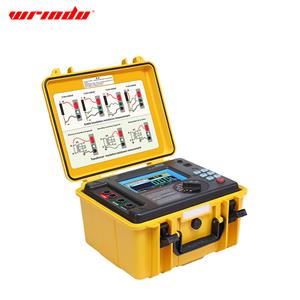
Using professional diagnostic tools—like insulation testers and load banks—helps identify issues early and prevent costly failures.
Click to know more about New Wrindu Insulation Testers.
What Are the Latest Trends in Generator Excitation Technology?
The generator market is evolving rapidly, especially with the rise of renewable energy and smart grids.
Key trends include:
Hybrid excitation systems combining both methods
Digital excitation control for improved stability
Brushless self-excited alternators for reduced maintenance
Increased adoption of separately excited systems in EV infrastructure
Future developments may integrate AI-driven control systems to optimize excitation dynamically, improving efficiency and reliability across applications.
Why Choose Wrindu for Generator Testing Solutions?
Wrindu (RuiDu Mechanical and Electrical) is a trusted global provider of high-voltage testing equipment. Since 2014, the company has specialized in designing and manufacturing advanced diagnostic tools for Transformers, Cables, Circuit breakers, Batteries, Relay systems and son on.
How Wrindu Testers Stand Out
High-precision measurement for excitation systems
Reliable performance in demanding environments
Customizable solutions for different generator types
Global support and technical expertise
Whether you're maintaining a self-excited generator or calibrating a separately excited system, Wrindu provides the tools you need for accurate diagnostics and long-term reliability. Three Phases Capacitance and Inductance Tester is the choice you may need.
Which Generator Type Should You Choose?
The right choice depends on your specific needs:
Choose self-excited generators for simplicity, cost savings, and off-grid applications
Choose separately excited generators for precision, stability, and advanced control
Evaluating your load conditions, control requirements, and budget will help you make the best decision.
FAQs
Can a self-excited generator work without residual magnetism?
No. Residual magnetism is essential for initiating voltage build-up.
Why are separately excited generators more stable?
Because their field current is independent of load conditions, ensuring consistent magnetic flux.
Are self-excited generators suitable for laboratory use?
They can be used, but separately excited generators are preferred for accuracy and control.
What causes voltage drop in self-excited generators?
Armature reaction and weakening field strength under load.
Does Wrindu offer customized solutions?
Yes. Wrindu provides OEM customization, global shipping, and full technical support