Impedance vs Resistance Explained | Key Differences in Electrical Circuits
What Is the Difference Between Impedance and Resistance?
Impedance and resistance are both electrical properties that oppose current flow, but they behave differently depending on the type of circuit and components involved.
How Do Impedance and Resistance Differ in Electrical Properties?
Impedance refers to the total opposition to current in an AC (alternating current) circuit that contains resistance, inductance, and capacitance. It combines all these effects into a single value that limits current flow.
Resistance, on the other hand, is a basic property of a material or component that limits current in both AC and DC circuits. It is usually fixed for a given resistor and is measured in ohms (Ω). A resistor typically has two terminals and provides a constant restriction to current.
What Factors Affect Impedance vs Resistance?
Impedance depends on the relationship between voltage and current in AC circuits and is expressed as the ratio of voltage to current (Z = U/I). When voltage remains constant, a higher impedance results in a lower current.
Resistance is mainly influenced by physical properties such as:
Temperature
Material type
Length of conductor
Cross-sectional area
Resistance also changes with temperature, which is described by the temperature coefficient.
How Do Their Functions Differ in Real Applications?
Impedance is widely used in AC applications such as audio systems. For example, speakers are often rated at 4Ω, 6Ω, or 8Ω, and impedance affects performance and sound quality across different frequencies.
Resistance is more straightforward. A very low resistance (close to 0Ω) allows current to flow freely, similar to a short circuit. A very high resistance blocks current flow, similar to an open circuit in a series path.
How Wrindu Testers Stand Out?
In modern electrical diagnostics, accurate measurement of both impedance and resistance is essential for system reliability.
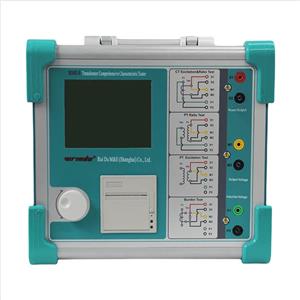
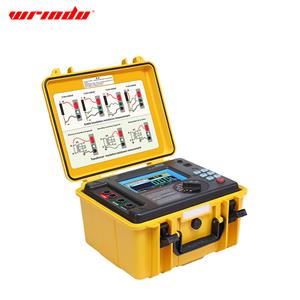
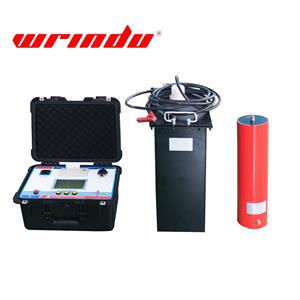
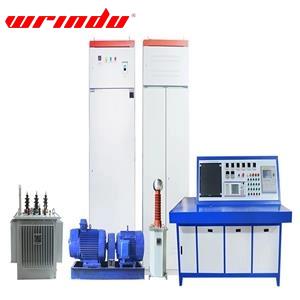
Wrindu testing systems are designed to deliver precise measurement results for resistance, insulation, and AC-related parameters in power equipment. These tools help engineers evaluate component health, detect abnormalities early, and ensure stable operation of transformers, cables, and switchgear in real grid environments.
FAQs
Q1: Is impedance only used in AC circuits?
Yes, impedance mainly applies to AC circuits where inductance and capacitance affect current flow.
Q2: Is resistance constant in all conditions?
Resistance is generally stable but can change with temperature and material properties.
Q3: Can impedance be lower than resistance?
Yes, depending on frequency and reactive components, impedance can vary and sometimes be lower than resistance.
Q4: Why is impedance important in audio systems?
Because it affects how speakers respond to different frequencies and overall sound performance.
Q5: How is impedance measured?
Impedance is measured as the ratio of AC voltage to AC current in a circuit (Z = V/I).
Click to know more about Wrindu Insulation Resistance Tester.