How to Properly Perform a Megger Insulation Test on a 3-Phase System?
A Megger insulation test is an important method for checking the condition of electrical insulation in 3-phase motors, transformers, generators, and cables. This insulation resistance test helps engineers find weak insulation before serious failures happen.
By using a Megger insulation tester correctly, maintenance teams can improve equipment safety, reduce downtime, and increase system reliability in industrial plants, substations, and power systems.
Why Is Megger Testing Important for 3-Phase Systems?
A Megger test checks the insulation resistance between:
Phase-to-phase
Phase-to-ground
Windings and earth
Good insulation prevents:
Electrical leakage
Short circuits
Equipment damage
Unexpected shutdowns
Low insulation resistance usually indicates:
Moisture
Dirt contamination
Aging insulation
Internal faults
Regular testing helps detect problems early.
What Safety Precautions Should Be Taken Before Megger Testing?
Safety is the first priority during insulation testing because Megger testers generate high DC voltage.
Before testing:
Completely disconnect power from the system
Apply lockout/tagout (LOTO)
Discharge capacitors and stored energy
Ground the equipment properly
Wear insulated gloves and safety glasses
Residual voltage inside windings or capacitors can still be dangerous even after shutdown. Technicians should also place warning signs or barriers around the testing area.
Why Is Megger Calibration Important?
Before starting the test, make sure the Megger insulation tester is working correctly.
You should:
Verify calibration status
Test the device on a known good sample
Inspect testing leads and probes
A properly calibrated tester provides accurate insulation resistance readings.
Environmental conditions also affect results. High humidity or temperatures above 40°C may reduce insulation resistance values.
How Do You Choose the Correct Test Voltage?
The test voltage depends on the equipment rating.
Common examples include:
| Equipment Voltage | Recommended Test Voltage |
|---|---|
| Up to 440V | 500V DC |
| Around 600V | 1000V DC |
| High-voltage systems | 2500V–5000V DC |
In many cases, the test voltage is about twice the operating voltage.
However, old equipment may require lower test voltage to avoid damaging aged insulation.
Standards such as IEEE 43 and IEC 60034 provide guidance for insulation testing.
What Is the Step-by-Step Megger Test Procedure for 3-Phase Motors?
Step 1: Isolate the Motor
Disconnect the motor completely from the power supply.
Then:
Open the terminal box
Remove star or delta links if necessary
Separate windings for individual testing
This allows accurate phase testing.
Step 2: Perform Phase-to-Ground Testing
Connect:
Positive lead to phase terminal
Negative lead to motor frame or ground
For example:
U1 to ground
V1 to ground
W1 to ground
Apply the test voltage for about 60 seconds and record the insulation resistance value.
Step 3: Perform Phase-to-Phase Testing
Next, test between phases:
U1-V1
V1-W1
W1-U1
Healthy insulation should show high and balanced resistance values.
Low readings may indicate winding damage or contamination.
Step 4: Discharge the Windings
After every test, discharge the windings safely to remove stored electrical energy.
Skipping this step may create shock hazards or affect future readings.
What Are PI and DAR Tests?
Advanced insulation testing often includes:
Polarization Index (PI)
Dielectric Absorption Ratio (DAR)
These tests provide deeper information about insulation condition.
How Does PI Testing Work?
PI testing compares:
1-minute insulation resistance
10-minute insulation resistance
A PI value above 2.0 usually indicates healthy and dry insulation.
Low PI values may suggest:
Moisture
Dirt contamination
Aging insulation
What Is DAR Testing?
DAR testing compares:
30-second reading
60-second reading
A DAR value above 1.4 is generally considered acceptable.
DAR testing is useful for quick insulation evaluation.
How Should Megger Test Results Be Interpreted?
Typical insulation resistance guidelines include:
| Insulation Resistance | Condition |
|---|---|
| Above 100 MΩ | Excellent |
| 20–100 MΩ | Acceptable |
| Below 2 MΩ | Poor condition |
Stable readings indicate healthy insulation.
Rapidly dropping values may indicate:
Carbon tracking
Moisture
Internal insulation failure
Results should also be corrected based on temperature.
What Common Mistakes Occur During Megger Testing?
Several common mistakes may reduce test accuracy.
Forgetting to Discharge Equipment
Residual voltage may:
Cause electric shock
Damage the tester
Affect future measurements
Testing Energized Equipment
Megger testing should never be performed on live circuits.
This may damage equipment and create serious safety hazards.
Leaving Jumpers Connected
In delta-connected motors, leaving jumpers installed may hide insulation problems between windings.
Always isolate the windings before testing.
Ignoring Environmental Conditions
Humidity and temperature strongly affect insulation resistance values.
Always record:
Ambient temperature
Humidity
Test voltage
Test duration
How Is Megger Testing Performed on Transformers and Generators?
For transformers:
Test high-voltage to low-voltage windings
Test windings to ground
Use higher test voltages such as 2500V or 5000V
For generators:
Test stator windings phase-to-ground
Test phase-to-phase insulation
Isolate rotor circuits if necessary
Cable systems also require end-to-end insulation testing.
How Wrindu Testers Stand Out
Wrindu, officially RuiDu Mechanical and Electrical (Shanghai) Co., Ltd., specializes in power testing and diagnostic equipment for utilities, substations, and industrial systems.
Accurate Insulation Measurement
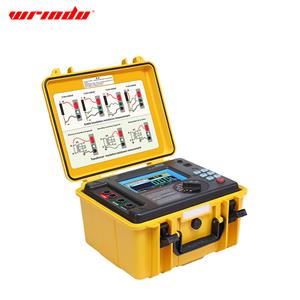
Wrindu Megger testers provide stable and reliable insulation resistance readings for motors, transformers, generators, and cables.
Wide Voltage Range
Wrindu insulation testers support multiple voltage levels, making them suitable for:
Low-voltage systems
High-voltage equipment
Industrial applications
Utility substations
Advanced Diagnostic Functions
Wrindu testers support:
PI testing
DAR testing
Temperature compensation
Data storage
These functions improve insulation analysis accuracy.
Easy Field Operation
Wrindu devices feature:
Portable design
Clear display
Simple controls
Durable construction
Engineers can perform testing efficiently in the field.
What Are the Best Maintenance Practices After Megger Testing?
Recommended maintenance practices include:
Perform annual insulation testing
Increase testing frequency in harsh environments
Keep historical test records
Monitor PI and DAR trends
Combine Megger tests with hipot and continuity testing
Trend analysis helps predict insulation aging before failure occurs.
What Are Some Popular Megger Testers for 3-Phase Systems?
| Model | Key Features | Best For |
|---|---|---|
| RD3215E IR Tester | Strong anti-interference ability, true color touch screen, easy field operation | General substations and HV line maintenance |
| RD3310X IR Tester | Most complete functions with PI/DAR/DD/SV advanced analysis | Professional power testing companies and advanced projects |
| RD3320Y IR Tester | Highest 20kV output, ideal for ultra-high-voltage equipment | 500kV substations and large power plants |
Why Is Insulation Testing Technology Evolving?
Modern insulation testing technology now includes:
Wireless communication
Cloud data management
AI trend analysis
IoT monitoring systems
These technologies help utilities and industries improve maintenance efficiency and reduce unexpected failures.
FAQs
What is the first step before performing a Megger test?
The first step is to completely isolate and de-energize the system using proper lockout/tagout procedures.
Why should windings be discharged after testing?
Windings may store dangerous electrical energy after testing. Discharging prevents electric shock.
What insulation resistance value is considered good?
In many cases, insulation resistance above 100 MΩ indicates healthy insulation.
Can humidity affect Megger test results?
Yes. High humidity may reduce insulation resistance values and affect measurement accuracy.
What is the purpose of PI and DAR testing?
PI and DAR tests provide deeper information about insulation aging, moisture, and contamination.
Does Wrindu provide technical support for insulation testing?
Yes. Wrindu provides technical support, testing solutions, and application guidance for insulation testing equipment.
Conclusion
Proper Megger insulation testing is essential for maintaining safe and reliable 3-phase electrical systems. By following correct procedures, selecting the proper test voltage, and understanding insulation resistance results, engineers can detect insulation problems before failures occur.
Modern insulation testers from Wrindu provide accurate measurement, advanced diagnostic functions, and reliable field performance for motors, transformers, generators, and cable systems.