Transformer Winding Deformation Tester | SFRA Analyzer - Wrindu



- Wrindu
- Shnaghai, China
- about 10 working days
- 1000 set/month
- RDRB-Ⅳ
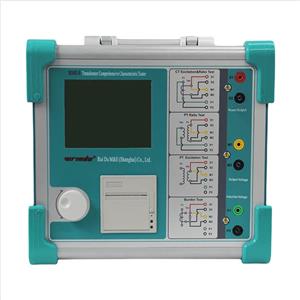
The Sweep Frequency Response Analyzer tests transformers rated 6 kV and above. It compares winding amplitude-frequency responses to detect deformation caused by short circuits, mechanical impacts, or other incidents, helping ensure safe transformer operation.
Description
Product Features
1. Characteristics of transformer windings are measured with frequency sweep method. Deformations of
windings such as distortion, swell or displacement of 6kV and above transformer are measured by
detecting amplitude-frequency response characteristics of each winding, not requiring lifting of transformer
enclosure or disintegration.
2. This Portable Transformer Winding Deformation Tester Achieve quick measurements, gauging a single winding
within 2 minutes.
3. Ensure high-frequency precision exceeding 0.001%.
4. Employ digital frequency synthesis for enhanced frequency security.
5. Portable Sweep Frequency Response Analyzer Ensure 5000 V voltage isolation, providing complete safety
for the testing computer system.
6. Simultaneously fill 9 contours, automatically identify criteria for each curve, and diagnosewinding distortions
for a comprehensive diagnostic verdict.
7. The evaluation software boasts powerful functionalities aligned with national standards DL/T911-2016/
IEC60076-18.
8. The software monitoring is user-friendly, requiring just one click to complete all measurements
post-specification setup.
9. The software interface is concise and visually appealing, featuring clear menus for analysis, save, report
export, print, etc.
Product Specifications and Technical Parameters
Item | Parameter |
|---|---|
Measuring Speed | 1–2 min per single-phase winding |
Output Voltage | Vpp – 25 V, automatically adjusted during testing |
Output Impedance | 50 Ω |
Input Impedance | 1 MΩ (response channel with built-in 50 Ω matching resistance) |
Frequency Sweep Range | 10 Hz–2 MHz |
Frequency Accuracy | 0.001% |
Frequency Sweep Mode | Linear or logarithmic |
Sweep Settings | Frequency interval and number of sweep points are freely adjustable |
Curve Display | Magnitude-Frequency (Mag-Freq) and Phase-Frequency (P-F) curves |
Measuring Dynamic Range | -100 dB to 20 dB |
Power Supply | AC 100–240 V, 50/60 Hz |
For more transformer test equipment, please click Transformer Test Equipment List
If your company has purchasing needs, please click Contact Us, we are always ready to provide you with quotes and solutions.
Software Features
1. Windows Compatibility: Supports Windows 2000, XP, 7, 8, and 10.
2. Data Management: Stores test data in a simple, organized format for easy access and management.
3. Curve Analysis: Displays up to nine curves at the same time, automatically calculates curve parameters, and identifies possible winding deformation with diagnostic suggestions.
4. Data Export: Automatically saves test results and supports exporting reports in Word format (requires Microsoft Office) or JPG format.
5. Easy Operation: Reduces manual input and simplifies the testing process.
6. One-Click Testing: After connecting the input and output signals, users can complete measurements with one click.
7. Clear Interface: Features a simple, clear, and easy-to-use software interface.
How Does a Transformer Winding Deformation Tester Work?
The tester applies a sweep-frequency signal to the transformer winding and measures its response over a specified frequency range.
It then generates amplitude-frequency and phase-frequency curves for analysis. Engineers compare the curves with reference measurements or between different phases to check for changes in winding characteristics.
Changes in the response curves may indicate winding movement or deformation. Further inspection can help determine the actual condition of the transformer.
This method is useful for checking transformers after short-circuit incidents, transportation, installation, or maintenance.
Where Is a Transformer Winding Deformation Tester Used?
This equipment is commonly used by transformer manufacturers, power utilities, testing laboratories, and maintenance teams.
Typical applications include:
Factory Testing: Establishes reference response curves before a transformer leaves the factory.
Transportation Inspection: Checks for possible winding changes after transportation.
Post-Fault Inspection: Helps assess winding conditions after short-circuit faults.
Routine Maintenance: Compares current test results with previous records to identify changes.
Transformer Acceptance Testing: Supports condition checks before putting a transformer into service.
Why Is Transformer Winding Deformation Testing Important?
Transformer windings are exposed to electrical and mechanical stress during their service life. Short-circuit currents can generate strong electromagnetic forces that may change the position or shape of the windings.
Some winding changes cannot be identified through a visual inspection alone. SFRA testing provides a way to compare the electrical response of transformer windings and identify possible changes.
For more reliable assessment, engineers should compare current curves with factory reference data or previous test records whenever available. SFRA results should also be considered alongside other electrical tests and inspection findings.
Wrindu After-Sales Support
Wrindu provides after-sales support to help customers use and maintain their testing equipment.
1-Year Warranty: The equipment comes with a one-year warranty for added purchase confidence.
Technical Support: Wrindu provides technical guidance for equipment operation, testing procedures, and basic troubleshooting.
Operation Guidance: Customers can receive support on equipment setup, software operation, and test result analysis.
Long-Term Assistance: Wrindu's technical team is available to help customers with questions during equipment use.
Wrindu aims to provide reliable testing equipment and practical technical support throughout the product's service life.