What Is an Acceptable Earth Resistance Value and Why Is It So Important?
The acceptable earth resistance value depends on the type of installation and the level of protection required.
For most homes, commercial buildings, and light industrial systems, a value below 5 ohms is widely accepted.
For critical facilities such as substations, hospitals, and data centers, the target is usually below 1 ohm to ensure maximum safety and equipment protection.
Proper grounding is essential. It helps prevent electric shock, reduce fire risk, and protect expensive equipment from damage.
What Is Earth Resistance and Why Does It Matter?
Earth resistance is the resistance the soil provides to electrical current flowing from a grounding electrode into the ground.
When an electrical fault occurs, excess current must safely dissipate into the earth. If resistance is too high:
Fault current may not clear quickly
Protective devices may fail to trip properly
Dangerous touch and step voltages can develop
Low earth resistance ensures:
Fast fault clearing
Reduced shock hazard
Better protection for transformers, switchgear, and sensitive electronics
For manufacturers, contractors, and facility owners, proper grounding is not optional — it is a key safety requirement.
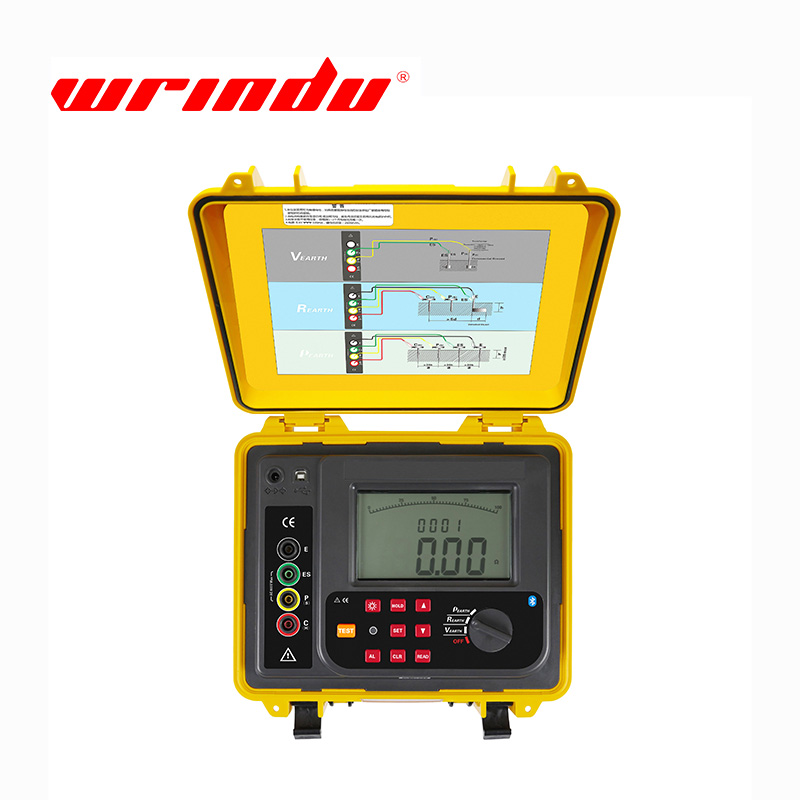
Click to know more about Wrindu Earth Resistance Tester.
How Is Earth Resistance Measured?
Earth resistance is measured by injecting a known current into the soil and measuring the resulting voltage drop. Modern digital testers automatically calculate the resistance value, making the process fast and reliable.
3-Point (Fall-of-Potential) Method
Most widely used method
Uses two auxiliary probes
Accurate for single grounding electrodes
Recommended for precise measurement
4-Point (Wenner) Method
Measures soil resistivity
Used for grounding system design
Helps engineers determine rod depth and quantity
Clamp-On Method
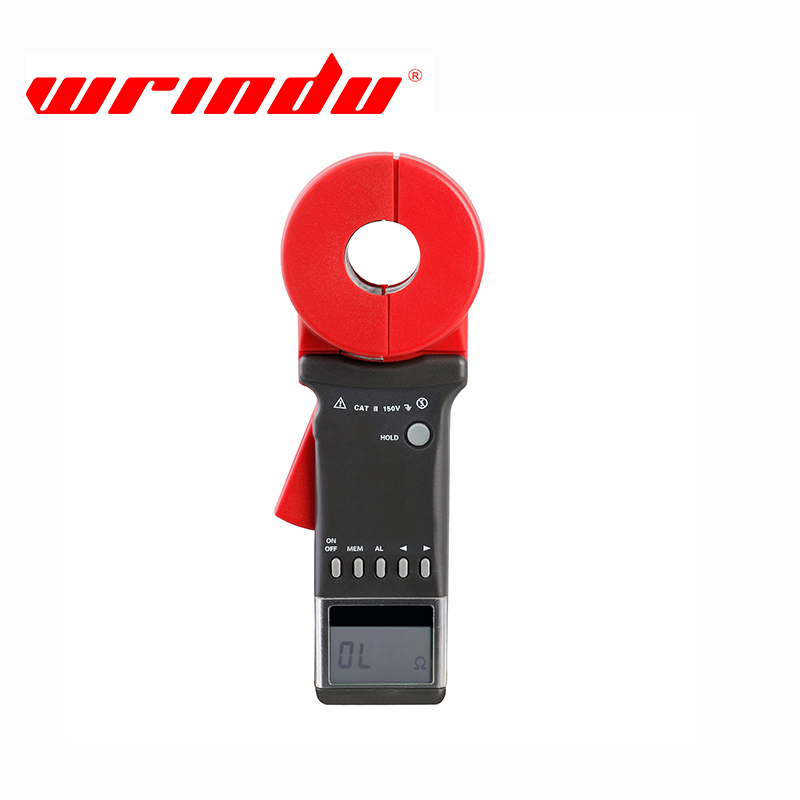
Click to know more about Digital Earth Ground Resistance Clamp Meter.
No need to disconnect grounding system
Suitable for multi-grounded systems
Fast and convenient
Slightly less precise than fall-of-potential
Think of grounding like a drainpipe. The easier current flows into the soil, the lower the resistance.
Recommended Earth Resistance Values by Application
| Application | Recommended Value | Notes |
|---|---|---|
| Residential / Commercial | < 5 Ω | General safety requirement |
| Industrial Facilities | 1–5 Ω | Depends on equipment sensitivity |
| Power Substations | < 1 Ω | Critical protection requirement |
| Hospitals / Data Centers | < 1 Ω | Protects sensitive electronics |
| Lightning Protection Systems | < 10 Ω | Per international standards |
Actual requirements may vary depending on national regulations and system design.
Where Are Earth Resistance Standards Defined?
Earth resistance requirements are defined in international standards such as:
IEC 62305
IEC 60364
IEEE 81
NFPA 70
These standards ensure grounding systems allow protective devices to operate safely and effectively.
How Soil Resistivity Affects Earth Resistance?
Soil resistivity directly impacts grounding performance.
Low Resistivity Soil (Better Grounding)
Wet clay
Loamy soil
Moist environments
High Resistivity Soil (Higher Resistance)
Dry sand
Rocky terrain
Frozen ground
If soil resistivity is high, solutions may include:
Driving deeper grounding rods
Installing multiple parallel rods
Using grounding grids
Adding conductive backfill (such as bentonite)
Moisture significantly lowers soil resistivity. Dry seasons often increase earth resistance.
When Should Earth Resistance Be Tested?
Testing should be performed:
During new installation
After upgrades or repairs
During routine maintenance
After lightning strikes or fault events
Soil conditions change over time. Regular testing ensures continued protection.
What Are the Risks of High Earth Resistance?
High earth resistance can result in:
Poor fault current dissipation
Increased electric shock risk
Fire hazards
Equipment damage
Failure of protective devices
Routine testing and proper design prevent these risks.
Who Uses Earth Resistance Testers?
Earth resistance testing equipment is commonly used by:
Electrical contractors
Utility companies
OEM manufacturers
Industrial maintenance teams
Construction companies
Power plant engineers
Accurate measurement ensures systems remain compliant and safe.
Key Takeaways
✔ For general installations, aim for less than 5 ohms
✔ For critical infrastructure, target less than 1 ohm
✔ Soil resistivity directly affects grounding performance
✔ Test during installation and on a regular schedule
✔ Follow IEC, IEEE, and NEC guidelines
Maintaining low earth resistance improves safety, ensures compliance, and protects equipment from costly damage.
FAQs
What Is Considered an Acceptable Earth Resistance Value?
For most systems, below 5 ohms is acceptable. Critical facilities typically require values under 1 ohm.
What Is the Fall-of-Potential Test?
It is the standard 3-point method used to accurately measure grounding electrode resistance.
Does the NEC Require a Specific Value?
The NEC generally allows up to 25 ohms but strongly recommends achieving 5 ohms or lower for improved safety.
How Often Should Earth Resistance Be Tested?
At installation and during periodic maintenance, especially in areas with seasonal soil changes.