SF6 Gas Leakage Monitoring and Alarm System



- Wrindu
- Shanghai, China
- about 10 working days
- 1000 set/month
- RDP6000
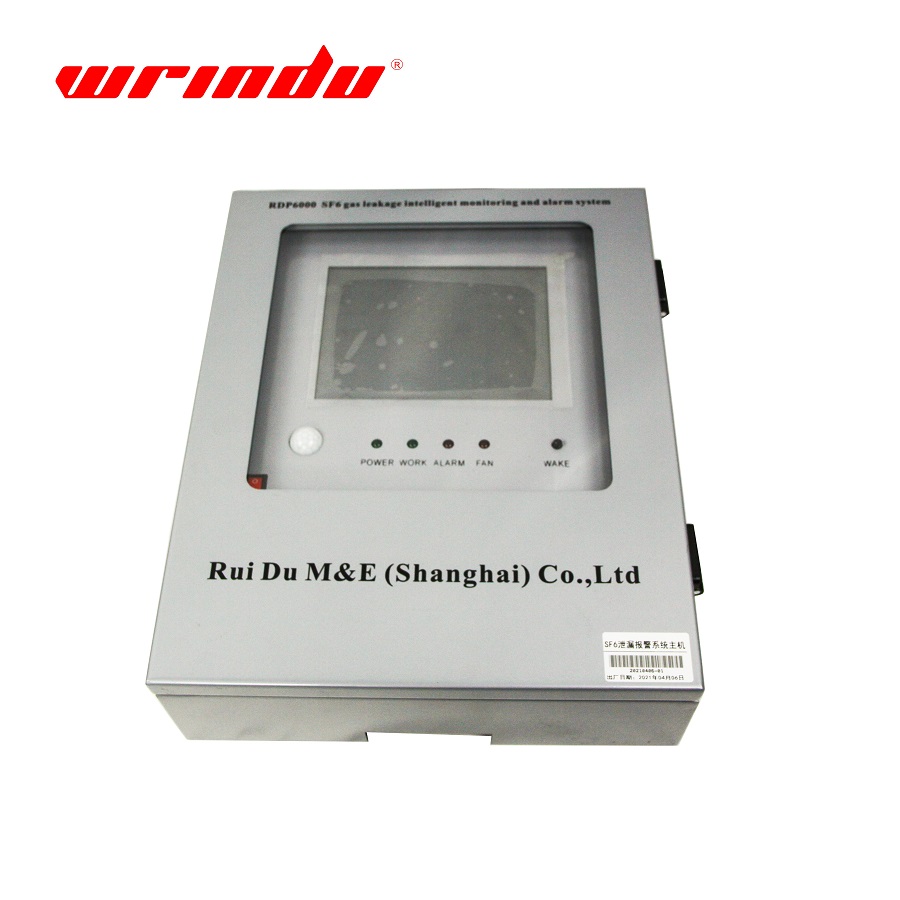
The SF6 Gas Leakage Monitoring and Alarm System detects SF6 gas levels and oxygen content, providing real-time alarms and automatic ventilation to help protect workers in GIS rooms and substations.
Product Description
The SF6 Gas Leakage Monitoring and Alarm System monitors SF6 gas concentration and oxygen levels in switch rooms. If SF6 gas levels become too high or oxygen levels drop below the safe limit, the system sends an alarm and automatically starts ventilation to improve air quality.
The system also measures temperature and humidity, provides voice alerts, supports remote alarms, and stores historical data for later review. Its SF6 sensor can detect concentrations from 10 to 5,000 ppm, while the imported oxygen sensor provides reliable readings to help protect workers. These features also help maintain a safer environment for electrical equipment.
The system is suitable for SF6 switch rooms, GIS rooms, and SF6 main transformer rooms.
Product Features
1. Automatic Ventilation: Starts the exhaust fan when SF6 gas leakage exceeds the preset limit.
2. Oxygen Monitoring: Detects oxygen levels and triggers an alarm and automatic ventilation if oxygen drops below the safe limit.
3. LCD Display: Features a large LCD screen with dynamic Chinese-language display, fast updates, and automatic screen protection.
4. Gas Level Alarm: Monitors SF6 and oxygen levels and activates the exhaust fan when readings exceed the set limits or fall below safe levels.
5. Scheduled Ventilation: Supports automatic exhaust at preset intervals.
6. Forced Exhaust: Activates forced ventilation when an alarm is triggered.
7. Historical Data: Stores and retrieves past monitoring data for review.
8. Temperature and Humidity Monitoring: Measures and displays temperature and humidity, with alarms when preset limits are reached.
9. Voice Alerts: Provides voice prompts to alert users to alarms and system status.
For more SF6 test equipment, please click SF6 Testing List.
Product Specification and Technical Parameters
Item | Technical Specifications |
|---|---|
SF6 Gas Alarm Threshold | 1,000 ppm |
SF6 Gas Detection Accuracy | Less than ±5% |
Oxygen (O₂) Detection Range | 0–25% |
Oxygen Deficiency Alarm Threshold | 18% |
Oxygen Detection Accuracy | Less than ±0.5% |
Temperature Display Range | -20°C to +99°C |
Temperature Accuracy | Less than ±0.5°C |
Humidity Display Range | 0–99% RH |
Humidity Accuracy | Less than ±3% RH |
Input Power Supply | AC 220 V ±20% |
Alarm Output Contact Rating | AC 220 V / 5 A |
Fan Output Contact Rating | 380 V / 15 A (three-phase) or 220 V / 15 A |
Automatic Fan Startup Conditions | O₂ concentration ≤19.6% or SF6 concentration >1,000 ppm |
Fan Control Modes | Automatic, manual, and forced startup |
Scheduled Ventilation | Fan operating time can be configured for different time periods |
Alarm Data Storage | Stores a large volume of alarm records for later review |
Alarm Contact Outputs | Five high-capacity alarm contact outputs |
Gas Transmitters | Imported SF6 and oxygen sensors designed for long service life |
SF6 Gas Alarm Error | Less than 1% |
Oxygen Alarm Error | Less than 0.5% |
Fan Controller Compatibility | Supports control of the existing exhaust fan |
How Does the SF6 Gas Leakage Monitoring and Alarm System Work?
The system continuously monitors SF6 gas concentration and oxygen levels in the room. When SF6 concentration exceeds 1,000 ppm or oxygen levels fall to the configured fan-start threshold of 19.6%, the system can activate the exhaust fan automatically. If oxygen drops to 18%, the oxygen deficiency alarm is triggered.
The system also monitors temperature and humidity. Alarm records can be stored and reviewed to help maintenance teams identify abnormal conditions and check previous events.
Installation and Safety Considerations
Correct installation helps the monitoring system provide reliable readings. Before installation, check the room layout, ventilation arrangement, power supply, alarm contacts, and compatibility with the existing exhaust fan.
The SF6 and oxygen sensors should be installed in suitable locations based on the room design and the manufacturer's instructions. Keep the sensors accessible for inspection and maintenance. The alarm thresholds and fan control settings should also be checked before the system is put into service.
Automatic ventilation does not replace safe entry procedures. If an alarm occurs, personnel should follow the site's safety rules and confirm that the room is safe before entering.
Routine Inspection and Maintenance
Regular inspection helps keep the SF6 gas monitoring system in good working condition. Maintenance personnel should:
Check SF6 and oxygen readings against the expected conditions.
Test the audible alarm, remote alarm, and alarm output contacts.
Confirm that automatic and manual fan controls work correctly.
Inspect the sensors, wiring, power supply, and ventilation equipment.
Review stored alarm records for repeated or unusual events.
Arrange sensor calibration or replacement according to the manufacturer's recommendations.
Record inspection results and maintenance work to support future troubleshooting and safety checks.
Wrindu Technical Support and After-sales Service
Wrindu can help customers confirm the system configuration, technical parameters, alarm settings, and fan control requirements before purchase. Customers should provide details about the installation room, existing ventilation equipment, power supply, and required alarm functions to help ensure the selected system meets their needs.
For installation questions, operation guidance, or troubleshooting, contact the Wrindu team with the product model and a description of the issue. Sensor service intervals, calibration requirements, and warranty coverage should be confirmed with Wrindu before purchase.